Worldwide Offices
May 31, 2026
Reading time: 18 min

Ways to enter and stay in Portugal: visas and residence permits

Portugal offers several pathways to a residence permit, including employment, study, family reunification, and investment. The permit allows its holder to live in Portugal, access public services, open bank accounts, and travel visa-free within the Schengen Area.

Investors can obtain residence through the Portugal Golden Visa. It grants the same core residence rights. Unlike other permits, it does not require the holder to relocate permanently to Portugal.

Vladlena Baranova
Shared different options to obtain Portugal residence permit
Fact checked by Elena RudaElena Ruda
Elena Ruda
Fact checked by Elena Ruda
Elena helped over 500 investors’ families to choose and obtain second citizenship or residency. She knows the pros and cons of each investment option and improves the industry expertise at the company.
Reviewed by Zlata ErlachZlata Erlach
Zlata Erlach
Reviewed by Zlata Erlach
Zlata helped to choose a program for more than 400 investors’ families who obtained residence permits in EU countries. Zlata is closely working with programs of the Caribbean countries and Vanuatu. More than 500 families obtained citizenship with Zlata’s help. All the investors who worked with Zlata obtained second passports or residence permits.
Residence permit in Portugal

What is a Portugal residence permit?

Portugal residence permit is the legal status that allows foreign nationals to live, work, or study in Portugal for an extended period. Residence permits are issued by the Agency for Integration, Migration and Asylum — AIMA — and come in two main categories: temporary and permanent[1].

Temporary residence permits are granted for specific purposes such as work, investment, study, or family reunification. These permits are valid for 1—2 years and may be renewed, provided the holder continues to meet the conditions.

In some cases, the terms “visa” and “residence permit” are used interchangeably. For example, the D7 visa for financially independent persons is officially called a visa, but it ultimately leads to obtaining a residence permit in Portugal.

Legally, a visa and a residence permit are different. A visa allows a foreign national to enter Portugal for a specific purpose, while a residence permit is issued after arrival and grants the right to live in the country long-term.

A permanent residence permit becomes available after 5 years of living in Portugal with temporary residency. They have no overall validity limit, but the residence card must be renewed every 5 years.

The residence-permit framework is based on the following legal provisions:

  1. Law No 23/2007 of July 4th sets the core rules for entry, stay, exit, and residence permits[2].
  2. Regulatory Decree No 84/2007 of November 5th implements Law 23/2007 and details procedures, including permanent residence and long-term resident status[3].
  3. Organic Law No 2/2018 of July 5th amends the Nationality Law No 37/81, expanding access to nationality of origin and naturalisation[4].
  4. Law No 18/2022 of August 25th amends the legal regime for entry, stay, departure, and removal of foreigners, reflecting updates to legal migration channels and procedures[5].

What are all the pathways to Portugal residence?

Portugal provides a set of residency visas Portugal tailored to different applicant profiles:

  1. Portugal Golden Visa. For investors willing to commit capital to funds, cultural projects, research activities, or job creation.
  2. Passive income: Portugal D7 visa. For financially independent individuals with stable income from sources outside Portugal.
  3. Remote work: the Portugal D8 visa. For digital nomads employed by or providing services to entities outside Portugal.
  4. Portugal Global Talent Visa. For experienced professionals, entrepreneurs, and innovators who cooperate with a Portuguese university.
  5. Work: D1 and D3 permits, EU Blue Card. For employees with a Portuguese job offer or highly qualified specialists in fields such as engineering, medicine, and science.
  6. Entrepreneurship: the Portugal D2 visa. For business owners, startup founders, and self-employed individuals, establishing commercial operations in Portugal.
  7. Study: D4 and D5 permits. For students enrolled in accredited Portuguese educational institutions.
  8. Family reunification: D6 visa. For close relatives of Portuguese residents or citizens.
  9. Other routes, including training, volunteering, and cultural activity permits for short-term or specialised purposes.

Each pathway is governed by specific legal and financial requirements[6]. Applicants must obtain the appropriate national D visa from a Portuguese consulate before entering Portugal to apply for a residence permit.

Foreign residents in Portugal: statistics

Portugal is one of the easiest countries in Western Europe for expats to settle in. Its immigration rules offer several routes for different applicants, including employees, students, entrepreneurs, financially independent people, digital nomads, family members, and investors.

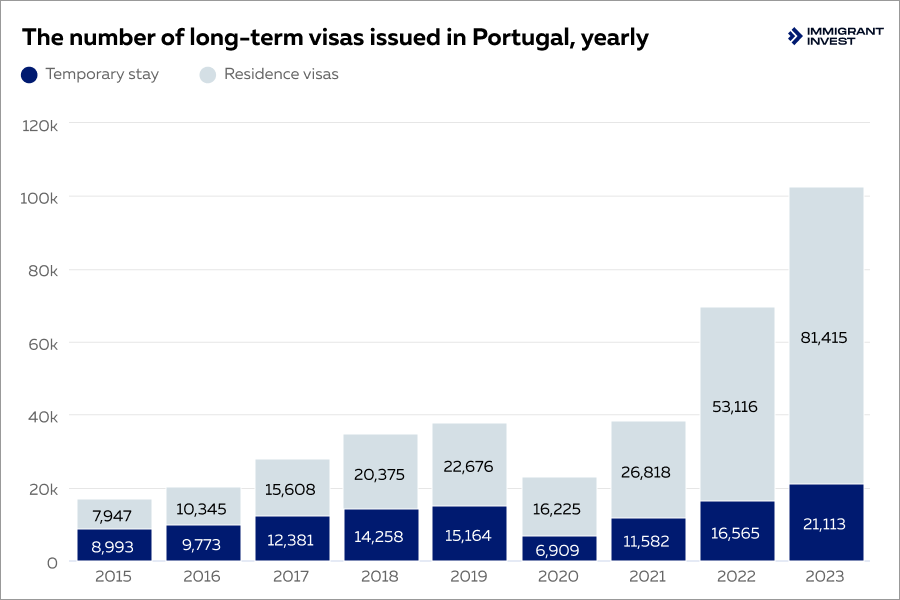
The number of foreign residents in Portugal has grown rapidly. By the end of 2024, AIMA recorded 1,543,697 foreign citizens living in Portugal, compared with about 421,800 in 2017[7]. This means the foreign resident population has almost quadrupled in 7 years. 

The sharp increase has placed pressure on Portugal’s immigration system. In 2024, AIMA issued 218,332 residence permits, 34% fewer than in 2023, and the agency’s report notes that administrative capacity, pending cases, and the transition from SEF to AIMA affected processing. As a result, applicants may face longer waiting times and a more prolonged residence obtainment process[7].

Portugal residence stats

Portugal Golden Visa as a residence route for investors

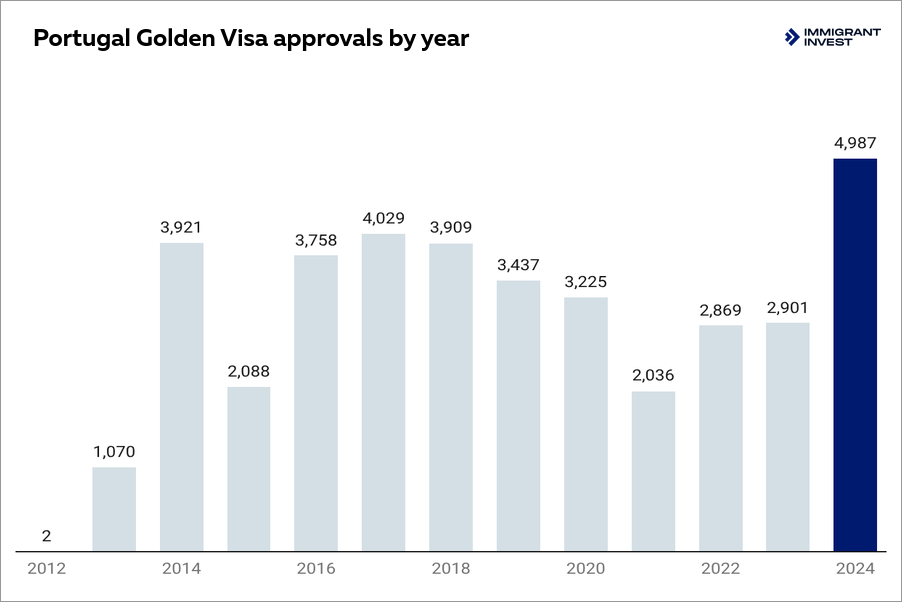
Among Portugal residence permit types, the Golden Visa is the main route for investors. It is suitable for applicants who want to obtain legal residence in Portugal by investment, but do not need to relocate permanently.

The Portugal Golden Visa, formally known as the Autorização de Residência para Investimento, or ARI, allows investors and their family members to obtain a Portuguese residence permit by investments. 

The initial permit is issued for 2 years and may be renewed for a further 3 years. After 5 years of legal residence, investors become eligible to apply for permanent residence. The programme requires minimal physical presence, with just 7 days of stay per year in Portugal.

5 investment options to choose from

Applicants may choose among the following investments:

  1. Investment fund units — €500,000. Investment in venture capital or private equity funds regulated by the Portuguese Securities Market Commission, CMVM. Minimum fund maturity is 5 years, and the investment must be maintained for at least 5 years.
  2. Cultural heritage support — €250,000. Contribution to artistic production, cultural infrastructure, or the restoration and preservation of national cultural heritage.
  3. Scientific research — €500,000. Investment in research activities carried out by public or private institutions within Portugal’s national scientific and technological system.
  4. Business — €500,000. Capital investment in a Portuguese company, combined with the creation or maintenance of at least five permanent jobs for a minimum period of three years.
  5. Job creation. Establishment of a company that creates and maintains at least 10 permanent jobs for at least 3 years. There is no minimum investment amount for this option. In low-density areas, the requirement may be reduced to 8 jobs.

All investment amounts and conditions are defined by Portuguese law and subject to compliance verification by AIMA[8].

Portugal abolished the real estate route under Law No 56/2023 on October 7th, 2023. Applications submitted before this date may still be assessed under transitional rules by AIMA[9].

Golden Visa eligibility for the main applicant and family members

To be eligible for a Portugal Golden Visa, applicants must satisfy the following conditions:

  • be over 18;
  • be non-EU and non-EEA citizen;
  • hold a valid passport or travel document;
  • have no criminal record or prosecution;
  • have no debts in Portugal;
  • not be prohibited of entry to Portugal due to prior expulsion;
  • not be recorded in the Schengen Information System, SIS;
  • have health insurance recognised in Portugal;
  • pay for investment from sources outside Portugal.

Applicants must meet both legal and financial due diligence requirements before obtaining a residence permit. Portuguese authorities assess the origin of funds, compliance with immigration rules, and the applicant’s overall background as part of the review process.

Family members may be added to a Portugal Golden Visa application. This makes the program attractive for families seeking long-term residence rights, access to the Schengen Area, and a potential pathway to Portuguese citizenship.

Eligible dependants are:

  • spouse or registered partner;
  • children under 18;
  • children aged 18 to 26, if they are unmarried, financially dependent on the main applicant, and enrolled in higher education;
  • parents of the main applicant or spouse;
  • parents under 65, if they are financially dependent on the investor.
Portugal Golden Visa statistics

Step-by-step Portugal Golden Visa process and timeline

Based on Immigrant Invest experience, the Portugal Golden Visa process takes at least 12 months. 

Immigrant Invest supports investors at every stage of the process. After the permit is issued, the company can also assist with renewals, and other matters that may arise during the client’s residence in Portugal.

[P12M]
1 day
Preliminary Due Diligence

Before making an investment, the main applicant and family members undergo preliminary compliance Due Diligence, conducted by Immigrant Invest. This is a confidential screening designed to confirm eligibility and minimise the risk of refusal at later stages.

The check includes verification against Anti-Money Laundering databases, international sanctions lists, and criminal record systems. Proper Due Diligence significantly reduces the likelihood of rejection and ensures the application aligns with regulatory requirements.

If potential risks are identified, a tailored solution is proposed — for example, providing additional supporting documents or selecting an alternative investment programme with a higher approval probability.

Up to 2 weeks
Preparation of documents

Immigrant Invest lawyers compile a personalised list of required documents for a Portugal residence permit by investment. They also complete government forms and arrange translations and notarisation.

1—2 weeks
Obtainment of a tax number

Applicants receive a nine-digit Número de Identificação Fiscal, NIF. This tax number is required to open a bank account, rent or purchase property, register a company, and complete most financial transactions in Portugal.

1—1.5 months
Opening of an account in a Portuguese bank

Golden Visa investments must be made from a personal account held with a Portuguese bank. The Immigrant Invest team helps open and activate the account. After that, the investor transfers the required funds and proceeds with the selected investment option.

1—6 weeks
Investment
Investment

Depending on the chosen option, the investor acquires fund units, establishes a company and creates jobs, or makes a contribution to culture or science. Lawyers collect and prepare all documents confirming the investment.

5—6 months
Application
Application

Electronic copies of the documents are submitted to AIMA, Portugal’s Agency for Integration, Migration, and Asylum, for review.

1—2 weeks
Submission of biometrics

The investor and family members travel to Portugal to submit original documents and biometric data. Appointments must be booked in advance through the electronic system.

Within 6 months after biometrics
Approval and acquisition of the residence permit cards

AIMA reviews the application within 6 months of biometric submission. Once approved, the applicant pays the required government fees. Residence permit cards are issued within the same period and collected in person or by a lawyer acting under a power of attorney.

Every 2 years
Renewal of the residence permit

To maintain residency, holders must spend at least 7 days per year in Portugal. The permit is renewed every 2 years. The renewal process mirrors the initial application and includes document submission, biometrics, and issuance of new residence cards.

How Americans can get the Portugal Golden Visa

US citizens can apply for the Portugal Golden Visa on the same terms as other non-EU nationals. The programme is suitable for Americans who want legal residence in Portugal and possibility to stay in the Schengen Area for more than 90 days in any 180-day period. 

A Portuguese residence permit removes the short-stay limit for Portugal and allows visa-free travel across other Schengen countries.

The Portugal Golden Visa does not require Americans to live in Portugal for most of the year. To maintain the residence permit, investors need to spend only 7 days a year in Portugal. 

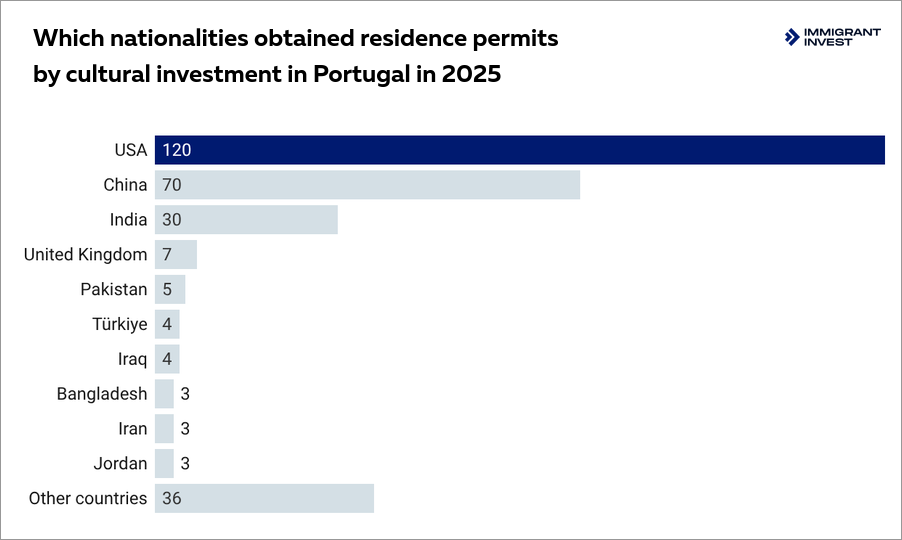
Americans are among the main applicants using the cultural investment route. The culture support option has grown sharply since real estate was removed from the Portugal Golden Visa programme. 

In 2025, investment in cultural projects reached €46.8 million, which was 298% more than in 2024, when this route attracted €11.7 million[10]. According to Portugal’s Ministry of Culture, Youth and Sport, this was the strongest result since the option was launched in 2020.

For US investors, the cultural route may be considered alongside the €500,000 fund option, especially if they prefer a lower minimum threshold: €250,000 as standard and €200,000 for qualifying projects in low-density areas.

In 2025, 41 cultural activities eligible for Golden Visa funding were fully or partially financed. The largest projects included: 

  • creation of the Toy Museum in Caramulo, which attracted €8.2 million;
  • safeguarding and rehabilitation of Palacete Fundação Alentejo in Estremoz with €4.2 million;
  • consolidation and restoration of Palácio Azurara with about €4 million.

In April 2026, Portugal’s Office of Strategy, Planning and Cultural Assessment published a list of 29 entities with projects eligible under the Golden Visa cultural route. They include foundations and cultural institutions such as Serralves, Casa da Música, Centro Cultural de Belém, Mata do Buçaco, Culturgest, the Museum and Monuments of Portugal, and Teatro Nacional de S. João.

Portugal Golden Visa — investment in culture
In 2025, Portugal issued 211 declarations confirming the actual transfer of capital by Golden Visa applicants using the cultural donation route, up from 50 in 2024[10]

Portugal residence permit for UK citizens after Brexit

Following Brexit, UK citizens are treated as third-country nationals in Portugal. They may stay in the Schengen Area, including Portugal, visa-free for up to 90 days in any 180-day period for tourism or business, but longer stays require a national visa and a residence permit[11]. 

Available Portugal residency pathways for UK nationals include:

  • Portugal Golden Visa: investment-based residency;
  • Portugal D7 Visa: for individuals with passive income;
  • Portugal D8 Visa: for digital nomads and remote workers;
  • Portugal Global Talent Visa: for exceptional contributors;
  • Portugal D2 Visa: for entrepreneurs and startup founders;
  • D4 Visa: for students;
  • D1 or D3 Visa: for employees with a job offer in Portugal.

Each route requires the applicant to apply for a D visa at a Portuguese consulate in the UK before travelling to Portugal to complete the residence permit process.

How Australians can get the Portugal Golden Visa

Australian citizens can apply for the Portugal Golden Visa if they are over 18, have a clean criminal record, and make a qualifying investment in Portugal. As Australia is not part of the EU or the EEA, its nationals are eligible for the programme on the same terms as other third-country investors.

Portugal is not a mass migration destination for Australians, but interest is visible in residence statistics. In 2024, AIMA recorded 1,161 Australian citizens living in Portugal and issued 252 new residence permits to Australians across all residence categories[12]. 

Types of Portugal work residence permit

Foreign nationals with a job offer from a Portuguese employer may apply for a Portugal work visa and subsequently a work-based residence permit. The employer typically initiates the process by securing authorisation from Portuguese labour authorities.

Global Talent Visa

The Portugal Global Talent Visa is a residence permit designed for highly qualified professionals, entrepreneurs, researchers, and industry experts who can contribute to Portugal’s academic and innovation ecosystem. Applicants must establish a formal collaboration with a recognised Portuguese university or research institution.

Eligibility requirements include:

  • bachelor’s degree or higher;
  • 3—5 years of relevant professional experience.

The participation fee is €170,000, covering the main applicant and up to three dependants.

Compared to the Portugal Golden Visa, this route does not require investment and is generally faster, with processing taking around 4 months.

Standard work permit

The Portugal D1 visa is available to employees who have a labour contract with a Portuguese company. Applicants must provide a signed employment contract as proof of the job offer. After entering Portugal on a D1 visa, the employee applies for a residence permit through AIMA.

Teaching activity permit

Individuals engaged in teaching or vocational training may apply for a residence permit by providing a contract of employment or an invitation letter from an educational institution, vocational training establishment, or research centre in Portugal.

Highly qualified specialist permit

The D3 visa is designed for highly qualified professionals, including engineers, doctors, scientists, and researchers. Eligibility requires:

  • higher education diploma;
  • employment contract of at least 1 year;
  • recommended salary of at least €1,900 per month.

The Portugal D3 visa facilitates the entry of skilled workers in sectors experiencing labour shortages.

Residence permit for entrepreneurs and self-employed: Portugal D2 visa requirements

The Portugal D2 visa, also known as the Immigrant Entrepreneur Visa, is intended for foreign nationals planning to establish or manage a business in Portugal. It is also available to self-employed individuals with contracts or offers to provide services in liberal professions.

Entrepreneurs may qualify in two cases: by investing in a business in Portugal, or by presenting a highly innovative startup project supported by a recognised business incubator.

Portugal D2 visa for starting a business

There is no statutory minimum investment threshold for establishing a company under the Portugal D2 visa. However, a higher level of investment improves the likelihood of approval. In practice, a minimum share capital of €5,000 is recommended.

In addition, D2 visa applicants must demonstrate personal savings of at least €11,040. This amount increases by 50% for a spouse or parent included in the application and by 30% for each child.

Portugal Startup Visa

The Portugal Startup Visa is available within the D2 category for entrepreneurs with innovative business projects. Applicants must have a contract with a certified incubator and receive approval from Portugal's Agency for Competitiveness and Innovation.

How to get a Portugal residence permit by studying: D4 and D5 visas

Students accepted to accredited Portuguese higher education institutions may apply for either a D4 or D5 visa, depending on their circumstances. The visa allows the holder to enter Portugal and apply for a residence permit valid for the duration of their studies.

Applicants must provide:

  • proof of registration at the institution; 
  • evidence of tuition payment where applicable;
  • documentation of sufficient means of subsistence in Portugal. 

The initial residence permit for studies is typically issued for 1 year and may be renewed annually for the length of the academic programme.

All the ways of obtaining residency in Portugal: studies
The University of Lisbon is the best in Portugal and ranks 230th in the QS World University Rankings 2026[13]

How to get Portugal residency by family reunification: D6 visa

Close relatives of Portuguese residents or citizens may apply for residency through family reunification. The D6 visa permits entry to Portugal for the purpose of applying for a residence permit aligned with the duration of the sponsoring family member's permit.

Eligible relatives include:

  • spouse or legally recognised non-marital partner;
  • minor or incapable dependent children of the applicant or their spouse;
  • minor children adopted by the applicant or their spouse;
  • adult dependent children who reside with the applicant and are enrolled at a Portuguese university;
  • dependent parents of the applicant or their spouse;
  • minor siblings in the applicant's custody.

Applicants must provide documents proving family ties, such as marriage certificates, birth certificates, or certificates of incapacity, as applicable.

How to get residency for financially independent individuals: the Portugal D7 visa

The Portugal D7 visa, often referred to as the retirement or passive income visa, is intended for individuals with stable passive income from sources outside Portugal, such as pensions, rental income, dividends, royalties, or investment returns.

Applicants must prove passive income equal to at least 100% of the Portuguese minimum wage for the main applicant, plus 50% for a spouse and 30% for each dependent child. Under the D7 visa, spouse, children under 21, and parents can be added to the application.

As of 2026, the minimum wage in Portugal is €920 per month. Accordingly, applicants must demonstrate a monthly income of:

  • €920 for the main applicant;
  • €460 for a spouse;
  • €276 for each dependent child.

Financially independent persons must also provide proof of accommodation in Portugal, either through a rental agreement or property ownership.

D7 visa holders are required to establish genuine residence in Portugal. During the validity of the residence card, absences may not exceed 6 consecutive months or 8 months in total.

How to get a residence permit for digital nomads: the Portugal D8 visa

Portugal has introduced a residence visa for digital nomads, commonly known as the Portugal D8 visa or Portugal nomad visa. It is intended for individuals who are employed by, or provide services to, entities located outside Portugal while living in the country.

Applicants must meet three core requirements:

  • demonstrate a monthly income of €3,680;
  • prove savings of €11,040, increased by 50% for a spouse or parent and 30% per child;
  • provide proof of accommodation in Portugal, either by renting or purchasing property.

Family inclusion is permitted and covers a spouse, children under 21, and parents.

As with the D7 visa, D8 visa holders must spend most of the year in Portugal to maintain their residence permit.

Other Portugal residency pathways

Training. Granted for 6 months or for the duration of the training programme. The permit is non-renewable. Applicants must provide a contract with a recognised professional training organisation or body.

Volunteering. Available to individuals engaged in volunteer activities in Portugal. Issued for one year or for the duration of the volunteer programme and cannot be renewed. Applicants must submit:

  • contract with the host organisation specifying the duration and schedule of the volunteer activity;
  • confirmation that food and accommodation costs are covered;
  • proof of civil liability insurance arranged by the host entity.

Cultural activity. Available to individuals participating in government-approved cultural activities in Portugal. Applicants must provide a work or service contract related to the cultural activity or a declaration from the organising entity. The permit is issued for 2 years and may be renewed for a further 3 years.

Can you obtain a Portuguese residence permit while already living in Portugal?

In 2024, Portugal ended the practice that allowed foreign nationals to enter the country on a tourist visa and apply for a residence permit afterwards. In most cases, obtaining a D visa in advance is now required in order to become a legal resident of Portugal. The Portugal Golden Visa remains an exception to this rule.

At present, residence permit applications are only finalised within Portugal. Applicants attend an appointment with AIMA to submit original documents and proof of eligibility for the relevant residence permit.

What documents are required for a Portugal residence permit?

While specific requirements vary by Portugal visa type, the following documents are commonly required for residence permit applications[14]:

  • valid passport or travel document;
  • proof of sufficient means of subsistence, such as bank statements, employment contracts, or proof of passive income;
  • evidence of adequate accommodation in Portugal, such as a property deed or a rental lease for 12 months;
  • consent for AIMA to check Portuguese criminal records, not required for applicants under 16 years of age;
  • tax registration number NIF, issued by the Portuguese Tax Authority;
  • health insurance recognised by the Portuguese National Health Service;
  • two recent colour passport photographs.

Additional documents may be required depending on the applicant's visa category, such as proof of investment, employment contracts, or university enrolment certificates.

How long are Portugal residence permits valid?

The validity period of a residence permit depends on the type and the applicant's individual circumstances.

Temporary residence permits are generally valid for 1—2 years and may be renewed for additional periods, provided the holder continues to meet the eligibility criteria. For example, a work permit linked to a 1-year employment contract is typically valid for 1 year. In cases where the duration of stay is not defined, the permit is usually issued for 2 years.

Portugal Golden Visa residence permits are initially valid for 2 years and may be renewed for successive 2-year periods. After 5 years of legal residence, holders may apply for permanent residence.

Permanent residence permits are valid indefinitely but the card must be renewed every 5 years to confirm that the holder continues to reside in Portugal and has not acquired grounds for revocation.

Comparison of Portugal residence permit types

Portugal residence permits differ by purpose, financial requirement, processing time, validity period, and stay obligation. The Golden Visa is the most flexible route in terms of physical presence, while most other residence permits require applicants to live in Portugal for most of the year.

For the Golden Visa, the minimum stay requirement is officially set at 7 days in the first year and at least 14 days in subsequent two-year periods.

Key differences between Portugal residence permit types

Residence permit typeMain requirementObtainment timeframeValidityResidence requirement for renewal
Golden Visa€250,000+ investment12+ months2 years7 days a year
D7 visa€920+ monthly passive income9+ months2 yearsAt least 1.5 years in a row or 16 months in total 
Digital Nomad Visa€3,680+ monthly salary from fully remote work9+ months2 yearsAt least 1.5 years in a row or 16 months in total
Global Talent Visa€170,000 participation fee4+ months2 yearsFlexible
Entrepreneur visaStarting or buying a business in Portugal9+ months2 yearsNo absence over 6 consecutive months or 8 months in total during the permit validity period
Employment visaEmployment contract with a Portuguese company9+ months2 yearsNo absence over 6 consecutive months or 8 months in total during the permit validity period
Family reunification visaSpouse, child, or parent of a Portuguese resident9+ months2 yearsNo absence over 6 consecutive months or 8 months in total during the permit validity period
Visa for study or scientific researchInvitation from a Portuguese university or research institution9+ months1 yearNo absence over 6 consecutive months or 8 months in total during the permit validity period

What are the benefits of Portugal residency?

Portugal suits people who want a steady base in Europe: clear rules, manageable living costs, and the freedom to move through the continent without logistical friction.

1. Living, working, and studying in Portugal

Resident status puts day-to-day living on solid ground. It allows long-term stay, access to healthcare and education, and — depending on the route — the ability to work or run a business. With residency, banking, leases, school enrolment, and tax registration become routine rather than improvised solutions.

2. Visa-free Schengen travel

Short trips across 29 Schengen countries follow one set of rules, and transport links make these journeys part of ordinary planning rather than special events. A quick flight from Lisbon reaches Madrid in about 1 hour 15 minutes and Paris in roughly 2 hours and 30 minutes. 

Road travel into Spain is equally simple — Lisbon to Seville takes just over 4 hours by car, opening the way to long drives along the Atlantic and Mediterranean coasts without repeated visa checks. For many residents, the EU becomes something close to weekend distance.

3. Business opportunities

Portugal’s economy has several areas with consistent activity. Tourism is the clearest example — 32.5 million guests were recorded in 2025, driving demand in accommodation, services, and local operations[15]. 

Technology, digital services, renewables, and hospitality keep attracting new businesses because day-to-day costs remain manageable. A 19% corporate tax rate on the mainland adds predictability for those planning long-term work or investment[16].

4. Special tax regime for high-skilled professionals

The IFICI+ tax regime for highly skilled workers was introduced in 2025. It applies a 20% flat tax rate for up to 10 years to income earned in recognised scientific research, higher education, and innovation roles. The purpose of the regime is direct: reward professionals whose work contributes measurable value to Portuguese research and development[17]. 

5. Affordable living

Portugal stays noticeably below Western European price levels, often by 20—30%, depending on region. Everyday essentials — groceries, utilities, public transport, dining — remain accessible, and the difference becomes more visible outside Lisbon and Algarve. Including rent, a realistic monthly budget for a single person is often about €1,000[18].

6. Slow and sunny life by the ocean

Portugal’s scale works in favour of residents. City life in Lisbon, Porto, or Coimbra sits close to beaches, river valleys, and national parks. Places like Cascais, Lagos, the Silver Coast, the Douro Valley, and Madeira let people move between home, work, and the outdoors with minimal effort. 

Year-round mild weather supports regular walking, surfing, hiking, cycling, and time near the water — activities that fold naturally into weekly routines rather than requiring full-day excursions.

7. Citizenship in 10 years

Portugal has approved changes to its nationality law: the standard naturalisation period is increasing from 5 to 10 years for most foreign residents, and to 7 years for EU and CPLP citizens. 

The countdown starts from the date the first residence permit is issued. The reform entered into force on May 19th, 2026[19].

With citizenship comes full EU freedom of movement — the right to live, work, study, and retire across any EU member state. It removes the need for residence permits elsewhere in the EU and provides long-term security for the entire family.

Portugal passport also opens doors to visa-free or visa-on-arrival entry to more than 170 countries worldwide, including the UK, Japan, and Singapore.

benefit of Portugal residence permit
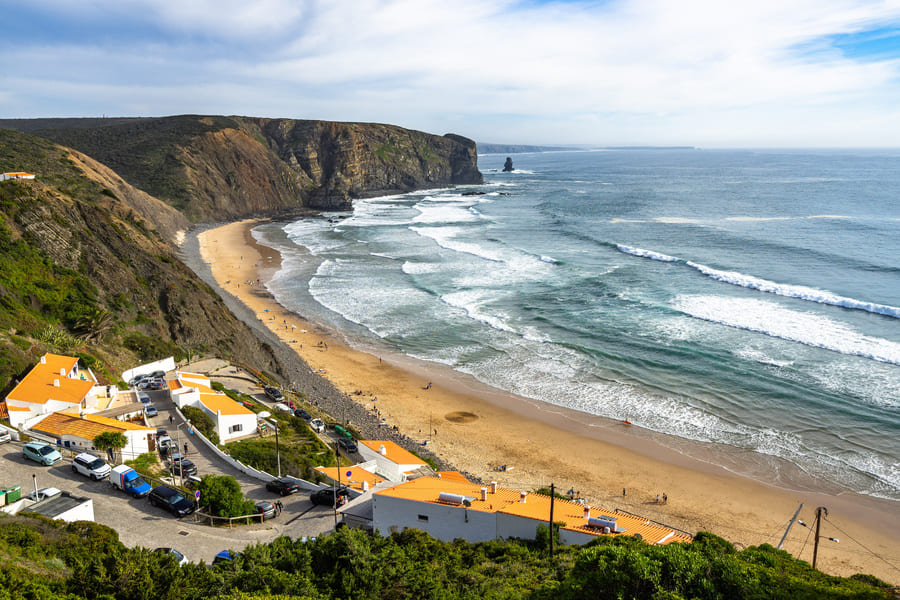
Praia da Arrifana, located in the Algarve, is widely regarded as one of the best surfing beaches in Portugal

How to get permanent residence in Portugal?

To qualify for permanent residence in Portugal, an applicant must meet the following conditions:

  • 5 years of legal residence in Portugal under a temporary residence permit;
  • valid residence status at the time of application;
  • sufficient means of subsistence and proof of accommodation in Portugal;
  • basic knowledge of Portuguese;
  • no serious criminal record;
  • compliance with tax and social security obligations.

Permanent residence removes the need to justify a specific purpose of stay. Holders may live and work in Portugal without restrictions, with renewals limited to updating the residence card every 5 years.

How to get Portugal citizenship after residency?

Foreign nationals may apply for Portuguese citizenship by naturalisation after 10 years of continuous legal residence. The application process is managed by the Portuguese Civil Registry and Identification Institute, Instituto dos Registos e do Notariado or IRN.

Requirements include:

  • proficiency in the Portuguese language at the A2 level, demonstrated by a CIPLE certificate or equivalent;
  • knowledge of Portuguese culture and society, assessed during the integration interview;
  • clean criminal record in Portugal and in the applicant's country of origin;
  • no outstanding tax or social security obligations.

Applicants must also demonstrate ties to the Portuguese community, such as family, employment, or property ownership.

Under the new citizenship law, most foreign residents will need 10 years of legal residence to apply for naturalisation, while citizens of EU and CPLP countries will be eligible after 7 years.

The countdown starts from the date the first residence permit is issued, not from the date of application. This means administrative delays before card issuance may affect the overall timeline.

Children born in Portugal may acquire Portuguese citizenship if at least one of their parents has held a residence permit in Portugal for 5 years before the child’s birth. Faster routes also remain available for people with Portuguese ancestry or spouses of Portuguese citizens.

Vladlena Baranova,
Head of Legal & AML Compliance Department, CAMS, IMCM

Risks and pitfalls of obtaining a Portugal residence permit

Obtaining a residence permit in Portugal involves multiple legal, practical, and timing-related risks. Careful planning at the outset helps avoid delays, refusals, and unintended tax or residency consequences.

Choosing the wrong initial visa

Not all entry visas allow conversion to long-term residence. Switching from a tourist status to work, passive income, or digital nomad residence is difficult or impossible. The initial visa type determines future residence options.

Selecting the correct route — D7, D8, D2, or Golden Visa — should be done before entry or application, ideally after reviewing eligibility and long-term goals.

Legislative and policy volatility

Portugal’s immigration and tax rules may change during the application process. Recent examples include the 2024 requirement to obtain a D visa before entry, the phase-out of the NHR tax regime, and periodic changes affecting Golden Visa routes or citizenship timelines.

Applicants should verify rules at the time of application, understand whether transitional protections apply, and factor regulatory uncertainty into timing decisions.

Physical presence requirements

Stay obligations in Portugal vary by route. Most permits require around 6 months per year in Portugal, while the Golden Visa imposes minimal presence — 7 days per year or 14 days over 2 years, applied separately to each family member.

Housing requirement before approval

Most residence permits require proof of accommodation, typically a 12-month lease or property ownership, at the application stage. Securing housing remotely and committing financially before approval creates practical and financial risk, especially if processing is delayed or refused.

Examples of real estate in Portugal

How to Get Residency in Portugal
Portugal
€450,000+
Stylish house with 4 bedrooms, Aveiry
400 m²
4
3
How to Get Residency in Portugal
Portugal, Porto
€353,000 — €442,000
Three bedroom apartment in a new residential project
141 m² — 164 m²
3
2
How to Get Residency in Portugal
Portugal, Porto
€365,000 — €565,000
Service apartments and commercial premises in a project near the ocean
40 m² — 209 m²
1
1

Consulate and AIMA appointment bottlenecks

Visa appointments at consulates and biometric appointments with AIMA are often limited, leading to extended timelines. End-to-end processing can reach 18—24 months, which may conflict with school, work, or relocation plans. Early preparation and buffer time are essential to manage delays.

Document validity windows and rework risk

Key documents — such as police certificates and apostilles — typically have short validity periods, often around 3 months. Appointment delays or formatting errors may require full document re-issuance, increasing time and cost. Document preparation should be aligned closely with scheduled appointments.

Tax residency and exposure

Spending 183 days or more in Portugal usually triggers Portuguese tax residency, affecting worldwide income and capital gains. Applicants with complex financial profiles should assess tax exposure across all relevant jurisdictions before committing to a residence route.

Why choose Immigrant Invest when applying for a Portugal residence permit

Immigrant Invest is a consulting firm that supports all major Portugal residence routes, including the Golden Visa, Global Talent Visa, D7, D8, and other permits. The company operates as a licensed and regulated agent, meaning every application is prepared under strict compliance and accountability standards.

Immigrant Invest is a member of the Investment Migration Council, a global association for investment migration professionals. This membership confirms the company’s commitment to industry standards, ethical practice, and transparent client support throughout the residence permit process.

The process is managed end to end, covering tax number issuance, bank account setup, document preparation, appointment scheduling, and on-the-ground support in Portugal. A structured workflow and experience with AIMA and consulates help reduce delays, avoid procedural errors, and navigate Portugal’s multi-stage residence process more efficiently.

Key takeaways about Portugal residence permits

  1. Portugal offers diverse residence routes for investors, entrepreneurs, students, digital nomads, and financially independent people.
  2. The Portugal Golden Visa requires investment starting at €250,000, with €500,000 in fund units being the most common option.
  3. Stay requirements depend on the route: most permits require around 6 months per year in Portugal, while the Golden Visa requires only 7 days per year.
  4. Permanent residence becomes available after 5 years of legal stay, with citizenship possible after another 5 years.
  5. Tax residency is separate from immigration status. Spending 183 days or more per year in Portugal triggers taxation on worldwide income.

Frequently asked questions

Is it easy to get residency in Portugal?

The amount of time, money and effort spent obtaining Portugal residency depend on each applicant’s circumstances.

For instance, those willing to get a Golden Visa must invest at least €250,000. They will obtain their residency cards in 12+ months

On the other hand, the obtaining period for a Global Talent Visa is 4 months. However, applicants must first establish cooperation with a recognised Portuguese university or research institution and prove that their professional background is relevant to the selected project. 

Processing time of applications for long-term visas for family reunification, study, or scientific research, strongly depends on the completeness of the candidate’s list of documents. 

Can I travel to Europe with a Portuguese residence permit?

Yes, any type of residence permit in Portugal allows its holder to travel visa-free to most countries in Europe, including: 

  1. Austria.
  2. Belgium.
  3. Bulgaria.
  4. Croatia.
  5. Czech Republic.
  6. Denmark.
  7. Estonia.
  8. Finland.
  9. France.
  10. Germany.
  11. Greece.
  12. Hungary.
  13. Iceland.
  14. Italy.
  15. Latvia.
  16. Liechtenstein.
  17. Lithuania.
  18. Luxembourg.
  19. Malta.
  20. the Netherlands.
  21. Norway.
  22. Poland.
  23. Portugal.
  24. Romania.
  25. Slovakia.
  26. Slovenia.
  27. Spain.
  28. Sweden.
  29. Switzerland.

Can I work in Germany with Portugal TRC?

A Portuguese temporary residence card allows its holder to live and work in Portugal, but it does not automatically grant the right to work in Germany or another EU country.

With a Portuguese residence card, a non-EU national may travel to Germany visa-free for short stays of up to 90 days in any 180-day period. However, employment in Germany usually requires a German residence permit that allows work, such as a work visa, EU Blue Card, or another employment-based permit.

The exception may apply to holders of EU long-term resident status, but even then, moving to Germany for work requires completing German immigration procedures.

What is a Portugal residence permit?

A Portugal residence permit is the document that grants foreign nationals the legal right to live in the country for a defined period. Depending on the route, it may also allow employment, business activity, or study.

How to get residency in Portugal?

Residency in Portugal can be obtained through several categories: investment, employment, entrepreneurship, study, passive income, remote work, or family reunification. Most applicants begin the process by securing a national D visa from a Portuguese consulate before applying for the residence permit inside Portugal.

What is the fastest way to get permanent residence in Portugal?

Permanent residence in Portugal follows a fixed timeline: applicants must complete 5 continuous years of legal residence under temporary permits before becoming eligible. There is no mechanism for shortening this period.

How much do you need to invest in Portugal to get residency?

Portugal’s Golden Visa requires a minimum investment of €250,000 for cultural projects, while most other routes start at €500,000, such as investment funds, research funding, or business investment paired with job creation. Creating ten permanent jobs also qualifies without capital investment.

Can you buy a house in Portugal to get residency?

Portugal no longer offers residency in exchange for buying property. Real estate ceased to qualify for the Golden Visa in October 2023, so applicants must now use other investment routes or standard visa categories.

How long does it take to get residency in Portugal?

Portugal’s processing times vary by route and administrative workload. Golden Visa procedures often take over 12 months, while other categories may move faster or slower depending on documentation and available appointments.

What does permanent residence in Portugal provide?

Permanent residence in Portugal grants the right to live, work, and study in Portugal indefinitely. Unlike temporary permits, it does not require applicants to continue proving residence conditions tied to a specific route — such as employment, passive income, or minimum stay requirements — making long-term planning more straightforward.

Is the NHR tax regime still available in Portugal?

Portugal closed the NHR regime to new entrants in 2024. A new framework — the IFICI regime — is now in place for eligible professionals in scientific research, higher education, and innovation roles. It provides a 20% flat tax rate on income for up to 10 years.

Can you get a Portugal residence permit while in Portugal on a tourist visa?

Portugal generally requires applicants to obtain a national D visa before entering the country. Residence permit applications filed from within Portugal are limited to specific programmes, such as the Golden Visa under particular conditions.

What is the D7 visa passive income requirement?

The Portugal D7 visa hinges on proving stable passive income from outside Portugal. The minimum threshold is tied to the national minimum wage — €920 per month in 2026.

How hard is it to get residency in Portugal?

How hard it is to get residency in Portugal depends on the route. Investment pathways require large lump-sum contributions, while work visas depend on securing a valid employment contract. D7 and D8 visas require meeting income thresholds and demonstrating accommodation. Family reunification relies on proving family ties and financial capacity. When requirements match the applicant’s profile and documentation is complete, most cases proceed without major complications.

What are the AIMA processing times for Portugal residence permits?

AIMA’s processing times fluctuate. Some categories, especially the Golden Visa, have faced substantial backlogs, while others move more quickly. Timelines depend on appointment availability, documentation quality, and current administrative capacity.

What are the Portugal Golden Visa investment options after October 2023?

Portugal’s post-2023 Golden Visa framework includes:

  • investment funds — €500,000,
  • cultural heritage projects — €250,000, 
  • scientific research — €500,000, 
  • business investment with job creation — €500,000 + five jobs, 
  • creation of ten permanent jobs.

The real estate option is not available any more.

Can UK citizens get Portugal residency after Brexit?

UK citizens remain eligible for Portugal residency through the same routes available to other non-EU nationals, such as the Golden Visa, D7, D8, D2, work permits, or study visas. Short stays of up to 90 days in a 180-day period remain visa-free.

How hard is it to become a Portuguese citizen?

Becoming a Portuguese citizen requires 10 years of legal residence, basic Portuguese proficiency, integration into the community, and a clean criminal record. When these conditions are met, the naturalisation process is generally well-defined.

How to get residency for retired people in Portugal?

Although Portugal does not offer a separate retirement visa, retirees usually apply under the D7 visa, which is designed for individuals with passive income. They obtain residence in Portugal by demonstrating a stable income of €920 per month and accommodation in the country.

Does Portugal have a talent visa?

Portugal offers a Global Talent Visa for highly qualified professionals, entrepreneurs, researchers, and industry experts. Applicants must establish a formal partnership with a recognised Portuguese university or research institution. A Bachelor’s degree or higher and 3—5 years of professional experience are required. The participation fee is €170,000 and covers the main applicant and up to three dependants.

Sources

  1. Source: Official website of the Agency for Integration, Migrations, and Asylum of Portugal
  2. Source: Law No. 23/2007 published in Portuguese Official Gazette No. 127/2007, 
  3. Source: Regulatory Decree No 84/2007 of Portugal, 
  4. Source: Law No 2/2018 of Portugal, 
  5. Source: Law No 18/2022 of Portugal,
  6. Source: Portuguese Ministry of Foreign Affairs — Type of Visa
  7. Source: AIMA — Migration and Asylum Report 2024
  8. Source: Information about the Golden Visa by the Agency for Integration, Migrations, and Asylum
  9. Source: Law No 56/2023 of Portugal
  10. Source: cultural donations surge, Dinheiro Vivo
  11. Source: European Commission — Visa policy
  12. Source: AIMA — Migration and Asylum Report 2024
  13. Source: QS World University Rankings 2026
  14. Source: AIMA — Autorização de Residência, Art.º 77.º, n.º 1
  15. Source: Portuguese National Statistics Institute — Tourism flash estimate
  16. Source: PwC — Corporate tax in Portugal
  17. Source: Article 58-A of the Tax Benefits Statute of Portugal
  18. Source: Numbeo — Cost of living in Portugal
  19. Source: The full text of the published law can be found in the Official Journal of the Portuguese Republic.
Subscribe
Notify of
guest

6 Comments
Newest
Oldest Most Voted
Inline Feedbacks
View all comments
Michael Harris
Michael Harris
10 months ago

Hello, I want to buy an apartment in Portugal to come there for vacations with my family. Can I get residency based on this?

Immigrant Invest
Editor
Immigrant Invest
10 months ago
Reply to  Michael Harris

Hello,

Thank you for your question.

Purchasing property in Portugal does not grant eligibility for residency. This was previously possible through the Portugal Golden Visa programme, but the real estate option was suspended in 2023.

To obtain residency, you may consider alternative routes. For example, if you intend to relocate to Portugal and have passive income from abroad, you may apply for the Visa for Financially Independent Persons.

If your aim is to visit Portugal occasionally, the Portugal Golden Visa may still be suitable, as it requires only a minimum stay of seven days per year. It is currently available for investments starting from €250,000.

To determine the best option for your situation, sign up for a one-to-one meeting with Immigrant Invest.

Ethan Caldwell
Ethan Caldwell
1 year ago

Hello,
I have a question about a digital nomad visa. You say that there are two types. If I obtain a one-year visa, can I then turn it into a permit?

Immigrant Invest
Editor
Immigrant Invest
1 year ago
Reply to  Ethan Caldwell

Hello,

Thank you for your question.

No, a one-year temporary stay visa for Portugal cannot be converted into a residence permit. After the visa expires, the digital nomad must leave the country.

To obtain Portuguese residency as a digital nomad, you will need to apply for a residency visa. This visa is valid for 4 months and allows entry into Portugal to apply for residency.

Anika Mehta
Anika Mehta
1 year ago

Hello I wondered if I can work in France if I obtain a passive income visa to Portugal?

Immigrant Invest
Editor
Immigrant Invest
1 year ago
Reply to  Anika Mehta

Hello Anika,

Thank you for your question.

None of the residence permits obtained in Portugal allow you to work in another EU state. To work in France, you will need to obtain a corresponding residence permit there.

However, with a Portugal D7 visa, you can travel visa-free across the Schengen Area and stay for up to 90 days within a 180-day period.

Ways to enter and stay in Portugal: visas and residence permits
Share:
Home Blog
Ways to enter and stay in Portugal: visas and residence permits