









Portuguese passport holders enjoy visa-free or visa-on-arrival access to 172 countries. Some of these include the Schengen Area countries, the United States, Canada, Brazil, Argentina, Australia, New Zealand, and Japan.
Foreigners can obtain a Portuguese passport by descent, marriage, or naturalisation — after 5 years of residency in the country.
Popular travel destinations for Portugal passport holders
Portuguese passport holders have visa-free access to 172 countries in Europe, Asia, Australia, and North America.
Europe. Portugal is part of the European Union; therefore, Portuguese passport holders can enter all 27 EU countries visa-free and stay there indefinitely.
Some EU countries may require Portuguese and other foreign nationals to register with a local immigration service if they plan to stay for longer than 180 days. It is advisable to check the rules of the host country before the visit.
The UK. Portuguese citizens can stay in the UK for 6 months without a visa; however, they must have a passport valid for the entire duration of their stay.
The USA and Canada. Portuguese citizens need an Electronic System for Travel Authorization (ESTA) to enter the USA and an Electronic Travel Authorization (eTA) for Canada. The process of obtaining either authorization is simple and takes around half an hour.
With an ESTA, Portuguese citizens can stay in the USA for 90 days. With an eTA, they can stay in Canada for up to 6 months. If entering Canada from the US by land or sea, an eTA is not required.
Australia. Portuguese citizens need to apply for an eTA before entering the country. It is valid for one year and allows multiple entries. The maximum stay is 90 days per visit.
Asia. Portugal passport holders can travel visa-free to Singapore, South Korea and several other Asian countries. The allowed duration of stay varies by country. For example, one can stay up to 90 days in Hong Kong and Singapore, and 30 days in the Maldives.
Portuguese passport visa-free countries
List of Portugal passport visa-free countries
Portugal citizens can travel visa-free to 172 countries worldwide. Some of these countries do not require any additional procedures for entry. However, to visit others, one must go through electronic travel authorization or obtain a visa upon arrival. Obtaining an eTA is simple and fast; it is done remotely and takes about 30 minutes.
The entry conditions and the list of visa-free countries for Portugal passport holders are constantly changing due to the geopolitical situation. Therefore, it is advisable to verify the current requirements before travelling to any country.
Europe
Africa
The Americas
Asia
The Caribbean
The Middle East
Oceania
Benefits of a Portugal passport
The Portuguese passport offers many advantages besides visa-free travel to 172 countries.
Entry into Portugal at any time. Portuguese citizens can visit the country under any circumstances, even if the borders are closed.
Free medical services. Portugal has a high-quality healthcare system, and its citizens can benefit from it for free. They also receive a European Health Insurance Card (EHIC) that allows them to get treatment in any EU country, as well as in Iceland, Switzerland, and Norway, under the same conditions as in Portugal.
Free education. Kindergartens and schools are free in Portugal, and the university fees are very low for the country’s citizens.
Studying in Portugal is prestigious. Among the best universities in the country are the University of Porto, University of Lisbon, Universidade Nova de Lisboa, Universidade de Coimbra, all of which belong to the list of top 500 universities in the world. Portugal citizens can also study in other EU countries without having to pay tuition fees typically charged to non-EU students.
High quality of life. Like any EU country, Portugal offers comfortable living conditions. It boasts a developed economy, social security, and a favourable environment. Residents can enjoy a warm climate and healthy food year-round.
In 2023, Portugal was ranked 7th on the Global Peace Index and was also named the best travel destination in Europe.
Opportunity to pass on citizenship by descent. This status remains with a person throughout their life. Their children obtain Portuguese citizenship by birth.

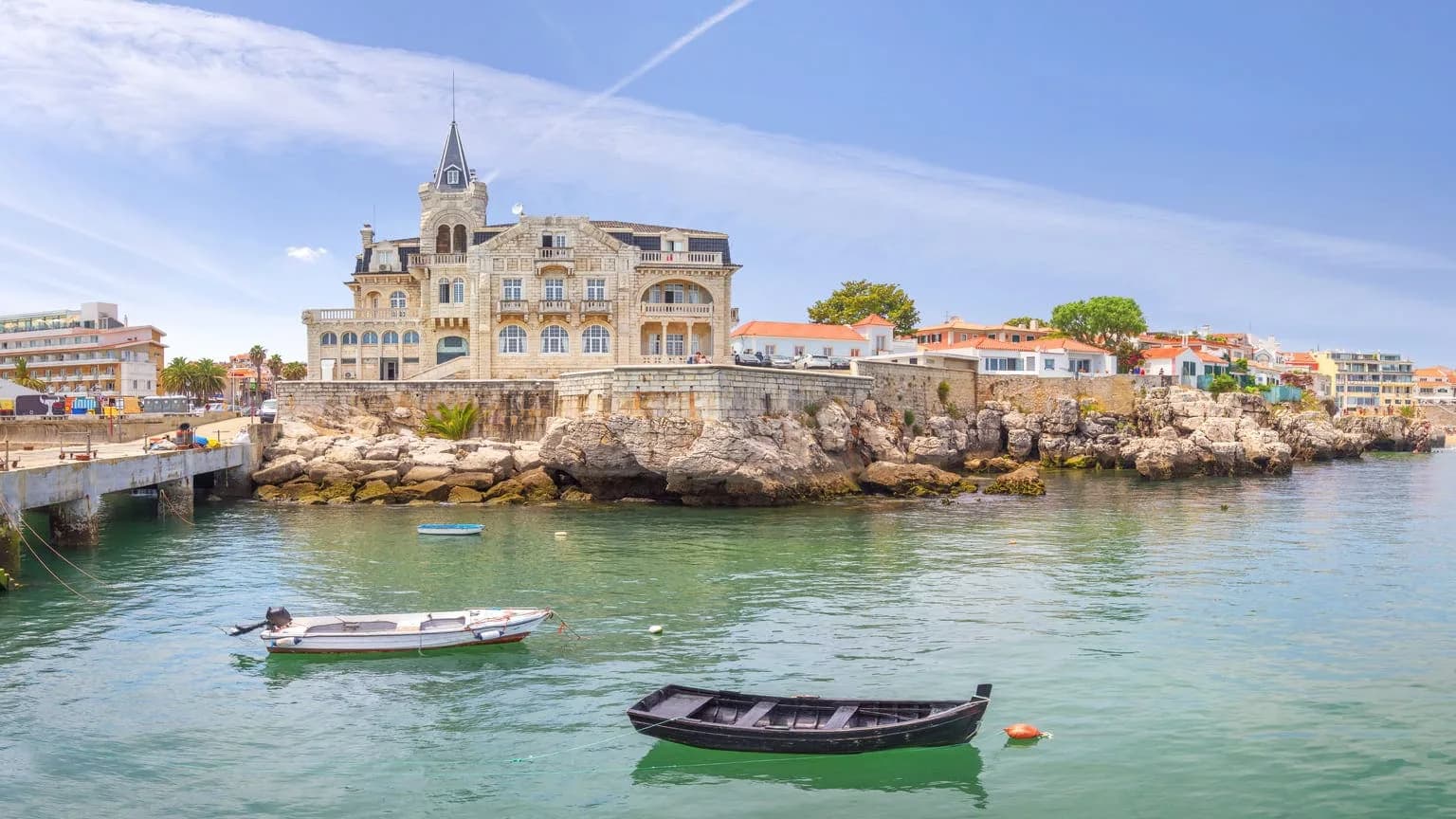
Lisbon is the capital of Portugal. As one of the oldest cities in the world, it has a rich history and beautiful ancient architecture
How to obtain a Portuguese passport
Portuguese citizenship can be obtained by birth, descent, marriage, or naturalisation.
By birth. A child born in Portugal automatically becomes a citizen if at least one of the parents is a Portuguese citizen or has held a Portuguese residence permit for at least a year. This also applies to children born abroad to Portuguese citizens.
By descent. Individuals whose parents or grandparents are citizens of Portugal can apply for Portuguese citizenship at any time.
By marriage. Citizenship can be obtained if a person has been married to a Portuguese citizen for at least 3 years. Portugal recognises unregistered partnerships, so individuals in non-marital partnerships can also apply for citizenship.
By naturalisation. Someone with a Portuguese residence permit can apply for Portugal citizenship by naturalisation after 5 years from applying for a residence permit. It’s required to pay a state fee of €250 and pass a Portuguese language test at the A2 level.
There is no passport by investment program in Portugal. However, wealthy individuals can first apply for a Portugal Golden Visa and then, after 5 years, apply for citizenship.
Applying for a D7 visa is another way to get the opportunity to apply for citizenship by naturalisation. The visa is granted for 4 months to individuals a monthly passive income of €870 or more from outside the country. After entering the country, D7 visa holders must obtain a Portuguese residence permit. It doesn’t require investment but offers the same privileges as the Portugal Golden Visa.
What is Portugal's Golden Visa, and how to obtain it?
The Golden Visa of Portugal is a residence permit that one can obtain by investing in Portugal’s economy. An investor can recover their investment after 5 years.
There are 5 investment options to choose from:
- €250,000+ in culture, art, or the reconstruction of national heritage;
- €500,000+ in fund shares;
- €500,000+ in research programs;
- €500,000+ in a business while creating at least 5 jobs;
- an unspecified amount in a business while creating at least 10 jobs.
After choosing an option, investors come to Portugal to open a bank account, obtain an individual taxpayer number, and sign a power of attorney for a lawyer to represent them in Portugal.
Once the investment deal is closed and all documents are gathered, the lawyer files an application. Afterwards, the investor and their family members return to Portugal to submit their biometrics.
The procedure for considering the application takes up to 6 months. If approved, the investor pays the fees for the residence permit card and collects it in person.
The residence permit is renewed every two years, following the same procedure as the initial application.
Differences between Golden Visa and citizenship
Visa-free countries for Golden Visa holders
Portugal Golden Visa holders have visa-free access to the Schengen Area. Although Cyprus is not yet part of the Schengen Agreement, it also grants visa-free entry to Portuguese residents. In total, there are 30 visa-free states.
Key takeaways for visa-free access with a Portuguese passport
- Portuguese citizens enjoy visa-free or visa-on-arrival access to 172 countries, spanning continents from Europe to Oceania and the Americas.
- Being part of the Schengen Area, Portuguese passport holders easily travel within Europe.
- Strong international ties allow entry to sought-after destinations like the US, Canada, Brazil, Argentina, Australia, New Zealand, and Japan.
- Portuguese citizenship, attainable through descent, marriage, or naturalisation, extends benefits like healthcare and education.
- The Portugal Golden Visa offers residency and, after five years, a path to citizenship, albeit with initial travel privileges that are less extensive than those of full citizens.


 Trusted by 10,000+ investors