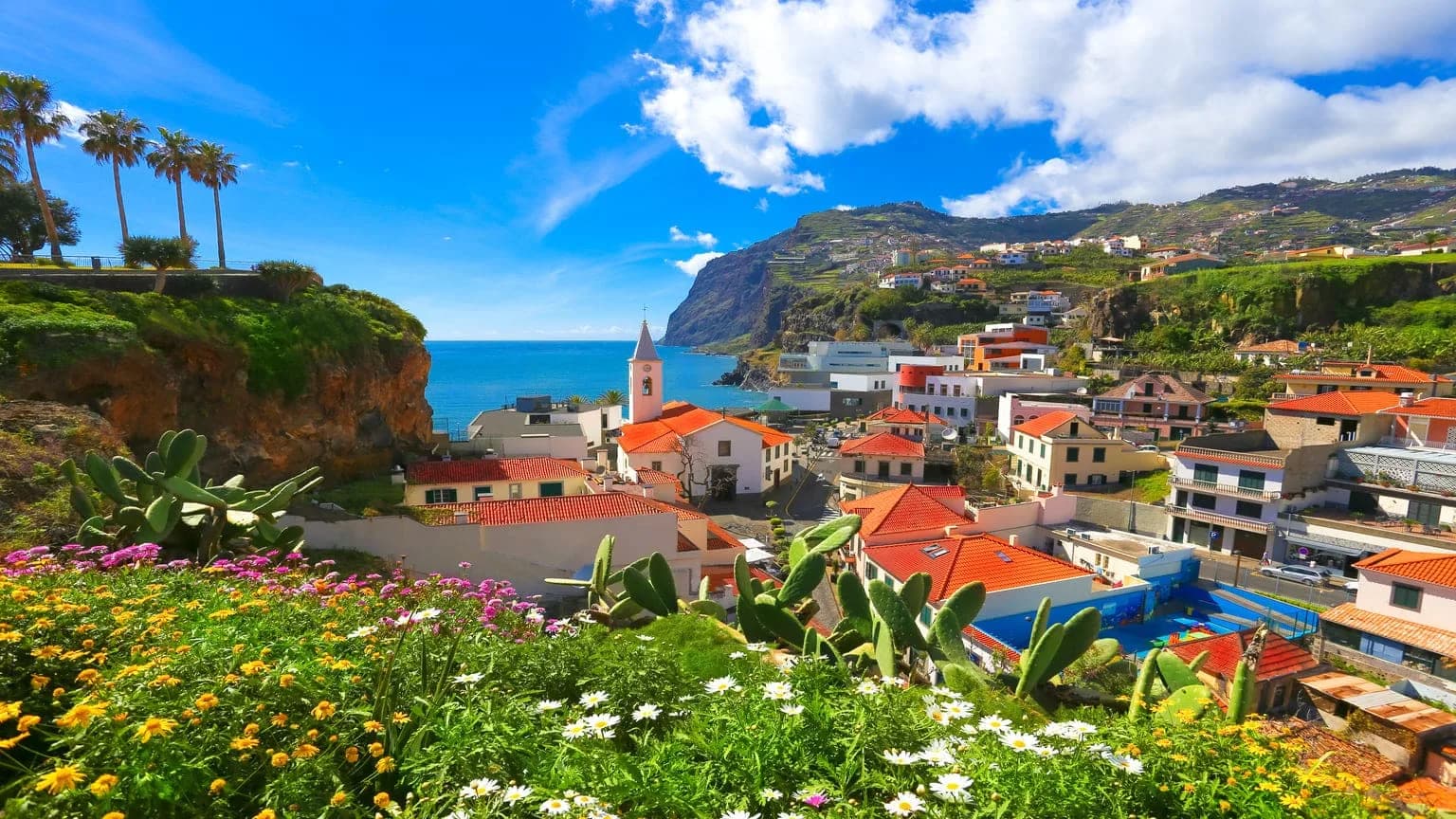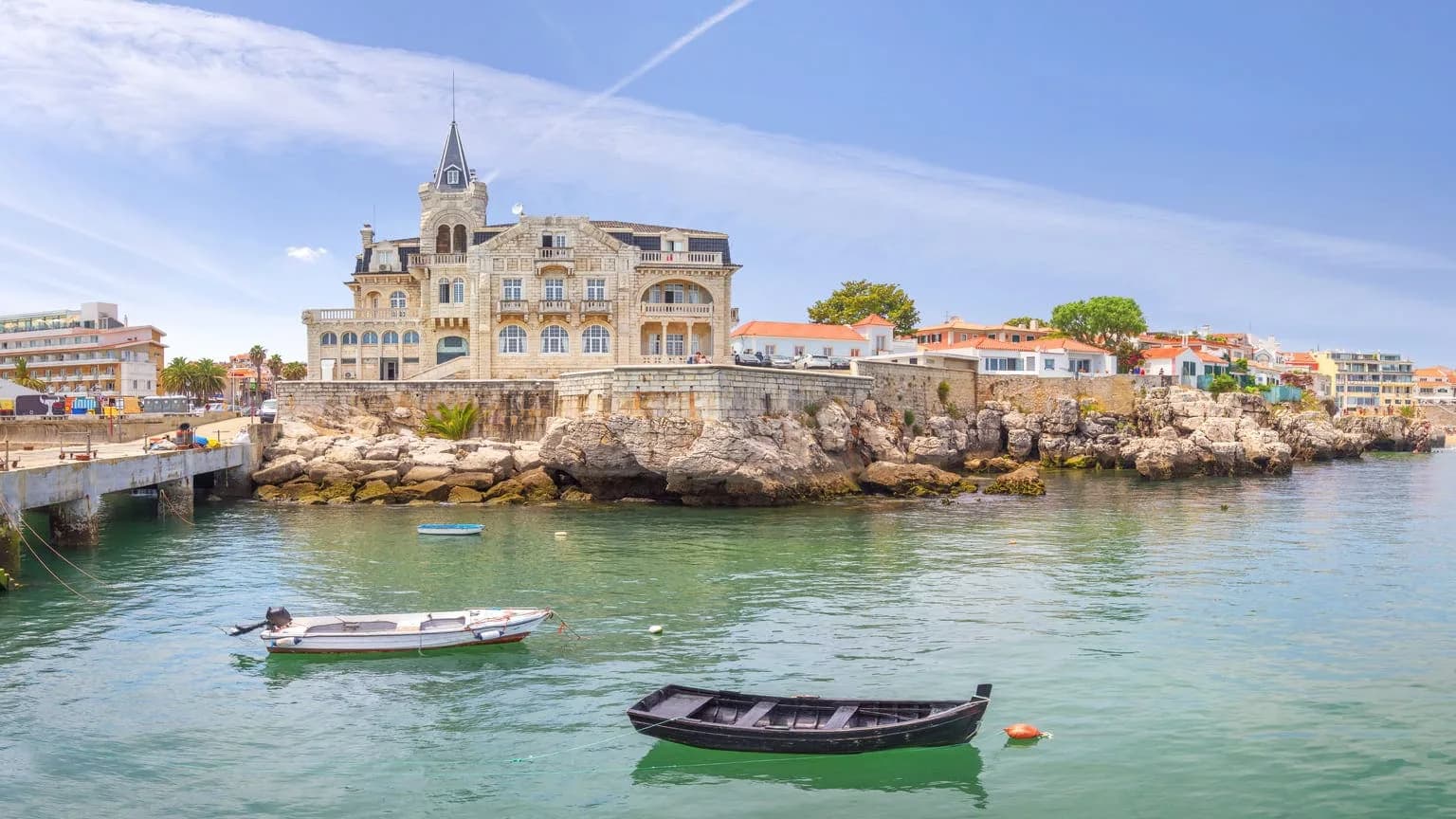






Mediterranean climate year-round, welcoming locals, fresh produce, and endless opportunities for exploration are just a few of the reasons why so many foreigners choose Greece as their new home. Today, around 750,000 foreign nationals reside legally in the country.
Greece offers a welcoming environment for nearly everyone — whether the goal is to work, study, reunite with family, invest, or simply enjoy life on passive income.
This article explores the types of residence permits available in Greece, along with the key benefits of living in the country.
Greece’s residency facts and numbers
Greece continues to strengthen its position as one of Europe’s most attractive destinations for relocation, retirement, and investment.
The country's welcoming policies, accessible residency options, and growing international appeal are reflected in the following key figures:
- in 2024, Greece recorded over 280,000 non-EU residents, the highest number to date;
- total number of foreign nationals living legally in the country has reached approximately 750,000;
- Greece ranks among the top 10 best countries to retire, according to the Global Retirement Index 2025;
- Greece Golden Visa is a route to a 5-year residency for a minimum investment of €250,000 in real estate or other qualifying assets;
- since its launch in 2013, nearly 50,000 Golden Visas have been granted, including permits for family members;
- program continues to attract a diverse international base, with most applicants coming from China, Turkey, Lebanon, the UK, the US, Iran, and Israel.
These figures reflect Greece’s rising popularity not just as a travel destination, but as a long-term home and strategic Plan B for families and investors worldwide.
Trusted by 10,000+ investors
Check your eligibility for the Greece Golden Visa
10 types of Greek residence permits for non-EU citizens
Residence permits in Greece are generally issued for a minimum of 1 year, although the exact duration depends on the type of permit granted.
Under Greek law, residence may be granted for various purposes. The most common types include:
- Investment.
- Remote work.
- Local employment.
- Employment for highly qualified professionals.
- Financial independence.
- Education.
- Family reunification.
- Marriage.
- International protection.
- Long-term residence.

Vladlena Baranova,
Head of Legal & AML Compliance Department, CAMS, IMCM
Greece offers two main routes to obtain a 5-year renewable residence permit, which is considered a long-term option under Greek migration law.
The EU long-term residence permit becomes available after 5 years of continuous lawful residence, provided the applicant passes a language and integration test and can demonstrate a stable income.
The Golden Visa is granted to non-EU investors who invest at least €250,000 in qualifying assets. It does not require a minimum stay or language exams, but the investment must be maintained for the permit to stay valid and be renewed.
Comparing residence options for living in Greece
Each pathway to Greek residency comes with its own eligibility criteria, validity period, and stay requirements, making it essential to choose the route that best matches your personal and financial circumstances.
This table compares the main types of residence permits available in Greece. It highlights the core requirements for each option, how long the permit is valid, whether you must spend a minimum number of days in the country, and who in your family can join you.
Greek residence permits: side-by-side comparison
Type #1
Residence permit by investment
Requirements. To apply for the Greece Golden Visa, investors must be over 18 years old, have a clean criminal record, and be capable of confirming the legality of their income.
Investment options. To obtain a Greece residence permit by investment, applicants can choose from 3 options: purchasing real estate, acquiring investment fund units, or opening a bank deposit.
The investment in fund units requires a minimum of €350,000. These funds offer average annual returns of 4—5%. Placing a bank deposit requires an investment of at least €500,000.
The most popular route is the purchase of real estate. Investment thresholds vary depending on the type and location of the property:
- €250,000 — for properties purchased for renovation;
- €400,000 — for off-plan and move-in-ready properties of at least 120 m² in provincial areas;
- €800,000 — for off-plan and move-in-ready properties of at least 120 m² in prime locations such as Athens and its suburbs, Thessaloniki, Mykonos, Santorini, and islands with over 3,100 residents.
Golden Visa properties can earn income through long-term rentals, with potential annual yields of up to 10%.
Real estate in Greece


Greece, Athens
€720,000+
Cosy and stylish apartments in modern style, Glyfada, Athens
 98 m²
98 m² 2
2  2
2 
Greece, Athens
€1,185,000+
Luxury apartments, Varkiza, Athens
207 m²4 4 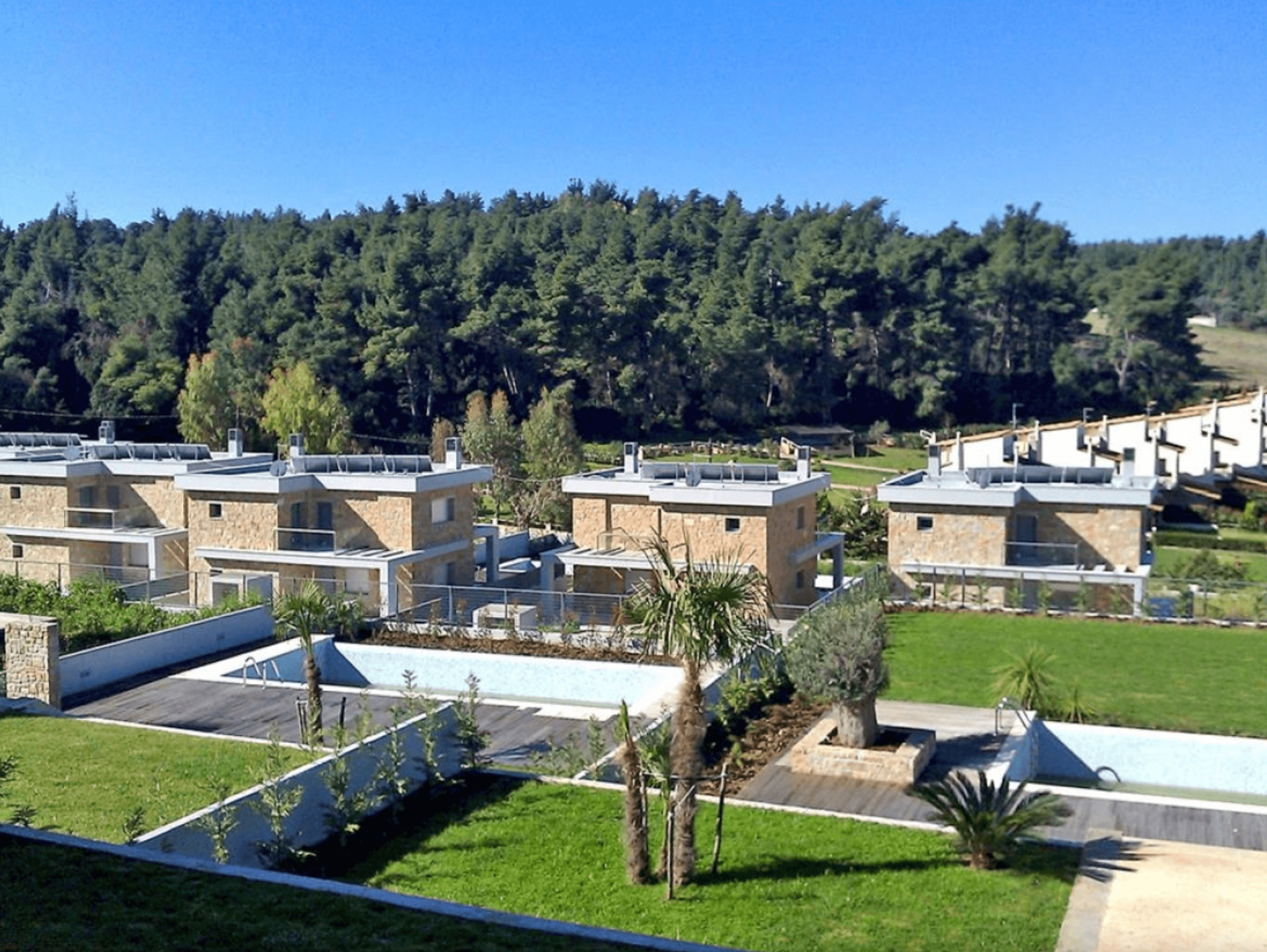
Greece, Kassandra
€505,000+
Modern villa, Sani, Kassandra
170 m²4 3 Family inclusion. The investor may include their family members in the application:
- spouse or registered partner — partners must have a cohabitation agreement registered in Greece;
- children under 21 — students;
- parents.
Family members and the investor are not permitted to take up employment in Greece. However, they are allowed to engage in business activities.
Validity. The Greece Golden Visa is initially issued for 5 years and can be renewed every 5 years as long as the investment is maintained.
After 5 years of legal residence, holders may apply for a long-term EU residence permit, and after 7 years, they become eligible to apply for Greek citizenship. Both statuses grant the entire family full access to the labour market and official employment in Greece.
Benefits. The Greek Golden Visa offers more than a legal foothold in the EU. It combines security, financial utility, and long-term freedom in one investment:
- Residence and real estate returns. Buying property gives the investor and their family the right to live in Greece, along with an asset that can generate income. In 2024, Greek property values rose by 8.7% on average — a useful hedge against inflation.
- Freedom to swap investments. You must hold real estate, but you're free to exchange it for another qualifying property. That gives you room to adapt your investment strategy.
- Durable Plan B. The residence permit grants the family full access to Greece — any time, for any length of stay. It’s a political and personal insurance policy in an uncertain world.
- Tax breaks on new homes. Newly built properties are exempt from Greece’s 24% VAT. Instead, you pay a modest 3.09% transfer tax — a win for investors buying off-plan or from developers.
- Optional flat tax. If you become a Greek tax resident, you can pay a flat €100,000 per year on global income. That’s a predictable alternative to progressive tax rates that can reach 45%.
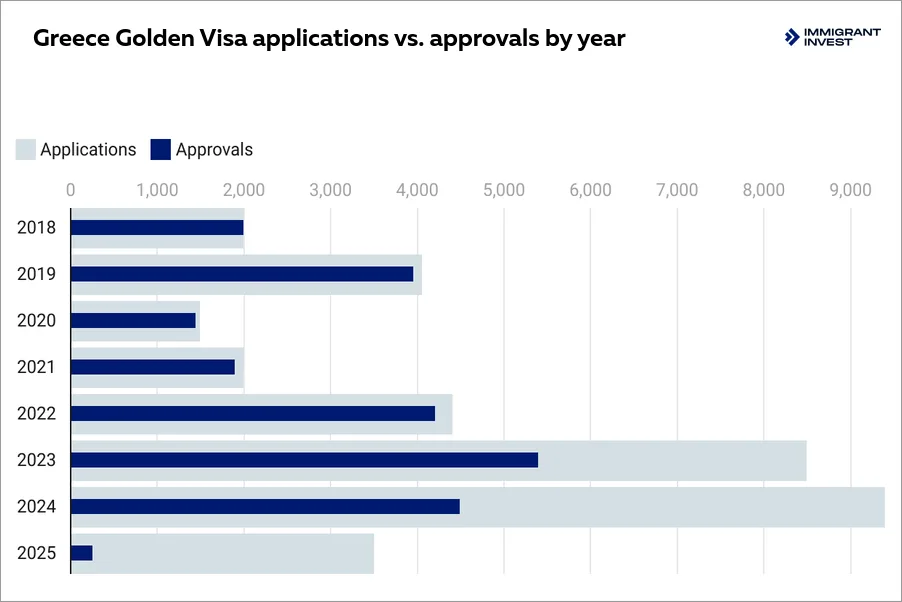
Greece Golden Visa statistics. Since Greece launched its Golden Visa program in 2013, nearly 50,000 residence permits have been issued — not just to investors but also to their family members.
In 2024, the program reached new heights with 9,289 applications, reflecting real estate investments worth at least €2.32 billion. That’s a rise from 2023, which already saw 8,477 applications. But the approval system hasn’t kept pace. In 2024, only 4,536 permits were granted. The backlog suggests bureaucratic limits are being tested by investor appetite.
One striking shift: the United States now accounts for more than half of all applications, overtaking China, Turkey, Lebanon, and the UK — countries that historically dominated the program.
Step-by-step procedure for obtaining a Greek residence by investment
Applying for a Greek residence permit through real estate investment takes at least 4 months. Based on Immigrant Invest’s legal team’s practical experience, here’s how the process typically unfolds — from first checks to final approval.
1 day
Preliminary Due Diligence
A certified AML officer runs a background check to flag any issues early. This internal step keeps rejection rates below 1% and sets the foundation for a clean application.
A certified AML officer runs a background check to flag any issues early. This internal step keeps rejection rates below 1% and sets the foundation for a clean application.
1+ weeks
Selecting a property
Immigrant Invest real estate experts help match properties to your goals — rental yield, resale potential, lifestyle, or all three. We have a network of vetted partners that offers access to over 200 homes across Greece suitable for the Golden Visa Program.
Immigrant Invest real estate experts help match properties to your goals — rental yield, resale potential, lifestyle, or all three. We have a network of vetted partners that offers access to over 200 homes across Greece suitable for the Golden Visa Program.
1+ weeks
Preparing documents
At this stage, the investor supplies the necessary files and signs a power of attorney, allowing the legal team to act on their behalf in Greece. Immigrant Invest lawyers handle all the paperwork, from ID checks to financial documents.
At this stage, the investor supplies the necessary files and signs a power of attorney, allowing the legal team to act on their behalf in Greece. Immigrant Invest lawyers handle all the paperwork, from ID checks to financial documents.
Up to 1 week
Getting a Greek tax ID
To buy property, you need a local tax number. It’s usually issued within 3 to 7 business days. Our legal team handles the paperwork.
To buy property, you need a local tax number. It’s usually issued within 3 to 7 business days. Our legal team handles the paperwork.
4+ weeks
Buying the property
The purchase begins with a 10% deposit and a draft agreement. The final contract is signed before a notary — either by you or your legal proxy. Once filed, you’ll get certified translations and official records of the deal.
The purchase begins with a 10% deposit and a draft agreement. The final contract is signed before a notary — either by you or your legal proxy. Once filed, you’ll get certified translations and official records of the deal.
1 day
Submitting the residence application
Once the investment is complete, the lawyer submits your application online. Within a week, you receive a confirmation certificate — valid for 1 year while your case is reviewed.
Once the investment is complete, the lawyer submits your application online. Within a week, you receive a confirmation certificate — valid for 1 year while your case is reviewed.
Within 24 weeks
Providing biometrics
You’ll be scheduled for an in-person appointment to submit biometric data — typically 1 to 2 weeks after the application goes in.
You’ll be scheduled for an in-person appointment to submit biometric data — typically 1 to 2 weeks after the application goes in.
12+ weeks
Receiving your residence card
After approval, your residence card is issued. You or your representative can collect it by presenting the original confirmation certificate and a valid passport.
After approval, your residence card is issued. You or your representative can collect it by presenting the original confirmation certificate and a valid passport.
Type #2
Residence permit for digital nomads
Digital Nomad Visa to Greece is designed for individuals who want to embrace the country’s Mediterranean lifestyle while continuing to work remotely.
The employment condition is that the applicant must work for a company registered outside of Greece or operate as a freelancer with clients based abroad. This visa strictly prohibits employment or business activity involving Greek companies or clients within the local market.
The income requirement is €3,500 per month, which is a minimum net monthly income. If the applicant is accompanied by a spouse or cohabiting partner, the required income increases by 20%. An additional 15% is added for each dependent child.
Required documents include:
- valid passport;
- proof of remote-work arrangements, such as the employment contract;
- health insurance covering Greece for the duration of stay;
- bank statements demonstrating required monthly income;
- rental agreement or title deed for accommodation in Greece;
- criminal record certificate from the country of residence, translated into Greek or English.
Validity. The Digital Nomad Residence Permit is initially granted for up to 2 years. It can then be renewed every 2 years.
Benefits for digital nomads in Greece include:
- 50% reduction in personal income tax for the first 7 years of residency;
- 1-year entry visa;
- no local labour-market test, job offer or company-sponsorship requirement.

Fibre-optic internet is widely available in Greece, and 5G covers 99% of the population, enabling digital nomads to work from almost anywhere
Type #3
Residence permit for work purposes
Before hiring a third-country national, the Greek employer must obtain authorisation from the relevant decentralised administration. This includes submitting a tax-clearance certificate and demonstrating their ability to meet wage obligations stated in the employment contract.
Fees. The application fee to hire a foreign worker is €200 per employee.
A state processing fee of €300 is paid by the employee when submitting the application.
Contract duration. To qualify for a residence permit, the employment contract must be valid for at least 1 year.
Wage levels. As of 1 April 2025, Greece has introduced the following minimum wage thresholds:
- €880 per month — for white-collar employees, performing professional, managerial, or administrative roles;
- €39.30 per day — for blue-collar workers, carrying out manual or skilled physical work.
Validity. A Greece residence permit for employed workers is issued initially for 2 years and renewable for a further 3 years at a time.
Benefits for employees in Greece are the following:
- contract-linked validity with flexible durations;
- simplified renewals without a new contract;
- full national social-security coverage.
In 2024, there were 119,517 active residence permits issued for employment purposes.
Type #4
Residence permit for highly qualified workers
For non-EU nationals with advanced skills, the EU Blue Card offers an alternative route to employment-based residence in Greece.
The minimum gross annual salary is €31,919, which is 1.6 times the national average.
To qualify for the EU Blue Card, the applicant must:
- hold a recognised higher education diploma relevant to the profession and duties outlined in the employment contract, or
- demonstrate at least 5 years of professional experience equivalent to a higher education level and relevant to the role.
In addition, the following conditions must be met:
- work contract for at least 6 months in Greece;
- comprehensive health insurance;
- confirmation that the applicant poses no threat to public order, safety, or public health;
- proof of residential address in Greece, if known, and permanent address at the time of issuance of the Blue Card.
Validity. The EU Blue Card is issued for 2 years and can be extended for 3 more years.
If the employment contract is shorter than 2 years, the permit will be issued for the duration of the contract plus an additional 3 months, provided the total does not exceed the 2-year maximum.
Benefits for EU Blue Card holders in Greece include:
- possibility to move to another EU Member State after 18 months to take up highly qualified employment under that state’s Blue Card rules — without additional visas and permits;
- contract-tied validity plus grace period;
- possibility to apply directly in Greece without obtaining a long-term national visa first;
- equal treatment in work and social rights.
In 2024, 58 EU Blue Cards were issued in Greece.
Type #5
Residence permit for freelancers
Monthly income of at least €2,000 is required to qualify as a financially independent person in Greece. The source of income must be outside Greece.
If family members accompany the applicant, the required income increases by 20% for a spouse and 15% for each dependent child.
No employment or business activity in Greece is allowed under this type of residence permit. However, after holding the permit for 5 years and obtaining long-term residence, all family members gain the right to work in the country.
Validity. The permit is initially granted for 3 years and is renewable for an additional 3-year period, provided the financial conditions remain satisfied.
Benefits that apply to freelancers are listed below:
- one permit, many income-types — let it be passive pension, dividends, rental yields or freelance earnings;
- a flat 7% tax on pension income for up to 10 years — one of Europe’s lowest for retirees.
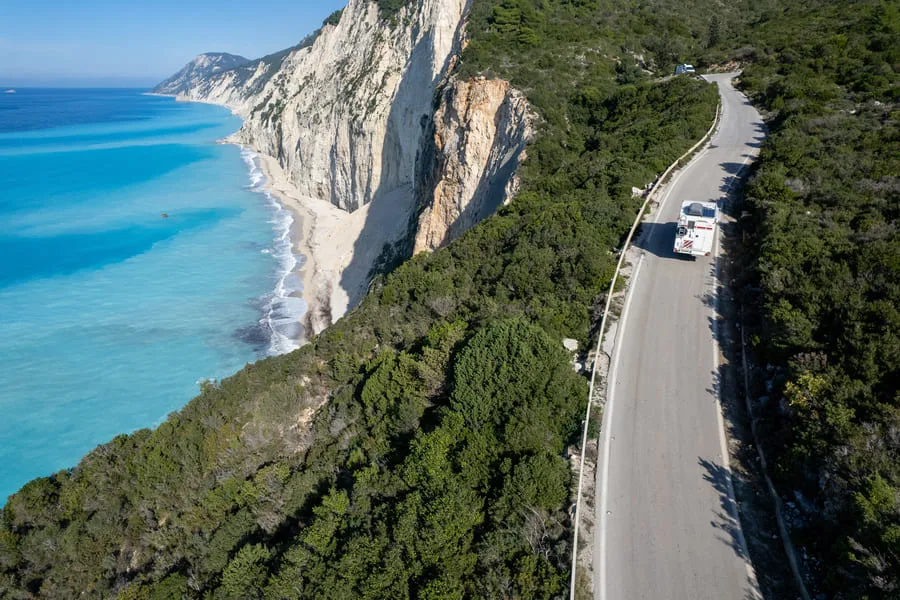
Financial independence gives the freedom to roam Greece’s endless landscapes by motorhome
Type #6
Residence permit for students
Requirements. Applicants must provide proof of university admission and demonstrate they can financially support themselves during their studies. To meet this requirement, at least €400 per month must be available in a bank account.
Benefits the students can enjoy are:
- right to work part-time — 15 hours per week;
- multi-year validity aligned to the program;
- possibility to obtain a residence permit not only for university studies, but also for attending professional training programs, language courses, music schools, or the religious Athonias Academy.
Validity. The residence permit is issued for the duration of the studies. After living in Greece for 5 years, students can become long-term residents, typically after completing a master's degree.
Type #7
Residence permit for family reunion
Requirement. If a foreign national has lived in Greece for 2 years with a residence permit, they are entitled to reunite with close relatives.
Eligible family members include:
- spouse over 18 years old;
- minor children — unmarried.
Validity. The residence permit for family reunion is issued for the same duration as the permit held by the sponsoring family member. To renew the family member's residence permit, it is necessary to reconfirm family ties, as well as the tax and social status of the sponsoring individual.
Benefits for family members obtaining a residence permit in Greece:
- access to employment at the first renewal of their residence permits;
- synchronous permit validity and renewals.
Type #8
Residence permit through marriage
To marry a Greek citizen, a foreign national must first enter Greece on a tourist visa and submit a marriage application at the local municipal office. Once the marriage is officially registered and a marriage certificate is issued, the foreign spouse becomes eligible to apply for a residence permit.
A key requirement is to prove the genuineness of the marriage. The couple may be invited to an interview, during which they will be asked questions about their shared life to confirm the relationship is authentic.
Validity. The residence permit granted through marriage is valid for 5 years. After this period, the foreign spouse may apply for long-term residence.
Benefits for Greek residents through marriage:
- access to the labour market;
- 5-year permit on first issue;
- citizenship after 3 years;
- no separate income-threshold uplift for spouse;
- right to an independent permit after divorce, if the marriage lasted at least 3 years;
- family reunification rights.

In 2023, a total of 17,366 residence permits in Greece were issued on the basis of family reunion and marriage
Type #9
Residence permit for international protection
Eligibility. In Greece, refugee status is granted to individuals who cannot return to their country of origin due to a well-founded fear of persecution based on:
- race;
- religion;
- nationality;
- membership in a particular social group;
- political opinion.
The applicant must prove that they are under threat of torture, inhumane treatment, or criminal punishment.
Validity. A residence permit for refugees is issued for 3 years, with the possibility of renewal. Spouses and children of the applicant are also entitled to receive a residence permit.
Benefits of a residence permit for refugees:
- right to work;
- protection from deportation;
- family reunification rights;
- integration support programs;
- citizenship after 3 years, if recognised as a stateless person by the Greek authorities.
There were 50,117 refugee statuses granted in 2024.
Type #10
Long-term residency in Greece
Stay requirement. Long-term residency in Greece is available after 5 years of residing in the country. Short absences are permitted during this period, provided they do not exceed 6 months at a time or a total of 10 months over the 5-year period.
Integration requirement. Applicants must demonstrate knowledge of the Greek language at an A2 level, along with a basic understanding of Greek history and culture.
Income requirement — €10,560 per annum. Pretenders for long-term residence in Greece should prove an annual income not lower than the minimum wage, which in 2025 is €10,560.
Benefits of long-term residency in Greece:
- full access to the Greek labour market, enabling all residents to work and start a business;
- life-long status;
- no mandatory stay requirement.
Validity. Long-term residence status has no expiration, though the residence card must be renewed every 5 years.
Greek residence permit for EU, EEA, and Swiss nationals
All EU, EEA, Swiss citizens, and their family members have the right to reside in Greece.
Straightforward process. No special visa, residence permit, or investment is required. Individuals planning to stay in Greece for more than 90 days must simply register their presence.
Registration process. Registration is carried out at the local Aliens and Immigration Department or at Citizens’ Service Centres and is typically completed within 30 days of submitting the application.
Required documents. A valid passport or national ID card, proof of employment or self-sufficiency, and health insurance must be provided.
Key rights and perks include the following:
- right to work, study, or retire in Greece;
- access to public services under the same conditions as Greek citizens;
- citizenship after 3 years.
7 reasons why Greece is so appealing
1. EU and Schengen gateway. A Greek residence permit offers more than the right to live in Greece — it opens the door to the entire Schengen Area. Holders can travel visa-free across 28 countries for up to 90 days within any 180-day period, eliminating the need for separate visas for destinations like France, Germany, or Spain.
Greek residency also provides flexibility for short-notice business or leisure trips, as well as streamlined access to healthcare and public services in EU countries. After 5 years of legal residence, it becomes possible to apply for Greek long-term resident status. Citizenship is available after 7 years of living in Greece.
2. Easy to settle. With a large and well-established expat community, Greece offers a strong support network through active online groups, local meet-ups, and community organisations. Among the most popular are InterNations Athens and Digital Nomads Greece.
This international presence has also fostered a high level of English proficiency. According to the EF Index, Greece ranks 9th globally among countries with the highest English skills, making communication easier for non-Greek speakers.
Additionally, Greece ranks 10th in the world for ease of settling in, based on the Expat Insider Survey. This ranking reflects the country's welcoming atmosphere, relaxed lifestyle, supportive communities, and overall openness to foreigners.

Voidokilia’s shallow, clear waters and soft sandy bottom, are perfect for safe paddling. Nestled between dunes and hills, it feels secluded, with amenities in Petrochori village
3. Affordable quality of life. Greece’s overall cost of living is around 21% lower than in the US or the UK. Basic groceries in Greece cost about 19% less than in the UK and nearly 38% less than in the US.
Rent is also significantly cheaper — on average, around 50% lower. For example, a one-bedroom apartment in central Athens rents for approximately €460 per month, whereas similar accommodation in London or New York exceeds €1,000.
4. Safety and stability. According to the Numbeo Safety Index, Greece ranks as a safer country than Ireland, Sweden, New Zealand, and Italy. The intentional homicide rate is just 0.8 per 100,000 people.
5. Mediterranean climate year-round. Greece’s mild climate offers four distinct yet pleasant seasons, with cool, rainy winters, warm springs and autumns, and long, dry summers ideal for outdoor living. This weather supports an active lifestyle year-round and fills local markets with fresh, seasonal produce — from spring strawberries and cherries to winter citrus.
6. Healthy lifestyle. Greece promotes wellbeing through its natural and cultural assets. Therapeutic hot springs on Milos and Ikaria soothe body and mind, while Epirus and Paxos offer some of Europe’s darkest skies for restorative, starlit nights.
Thanks to varied microclimates — from snowy Mount Parnassus mornings to sun-drenched afternoons in Delphi — residents enjoy a balanced environment that contributes to a life expectancy of 83.1 years.
7. Rich cultural and natural diversity. The depth of landscape and heritage allows residents to enjoy Greece not only as a place to live, but as a country to continually explore and rediscover.
In the north, the Prespa Lakes near the Albanian border reveal a tranquil landscape of wetlands, rare bird species, and Byzantine hermitages carved into cliffs. The Pelion Peninsula blends forested mountains with hidden beaches and stone-built villages like Tsagarada and Makrinitsa.
In the Peloponnese, the mountainous region of Arcadia offers myth-laden trails and ancient monasteries tucked into gorges, while nearby Mani showcases fortified tower houses and barren, dramatic coastlines. Further east, the island of Samothrace is a haven for hikers, known for its waterfalls, hot springs, and mystical ruins.
To sum up: what to consider when choosing a residence permit in Greece
- The following categories of non-EU nationals can obtain a Greek residence permit: employers, digital nomads, financially independent people, students, family members of Greek residents, highly qualified professionals, and refugees.
- Investors can also become Greek residents through the Golden Visa. Investment routes include real estate purchases, investment in fund units, or a bank deposit. The minimum threshold is €250,000.
- To maintain residency, foreigners must spend 183 days per year in the country. The exception is Golden Visa holders, who have no mandatory stay requirement.
- Greek residents benefit from visa-free travel across the EU and the Schengen Area, access to public hospitals and schools, a large expat community, year-round warm weather, and rich cultural and natural diversity.
- Greek residents can be employed in Greece, except for investors, digital nomads, and financially independent persons.

 Trusted by 10,000+ investors