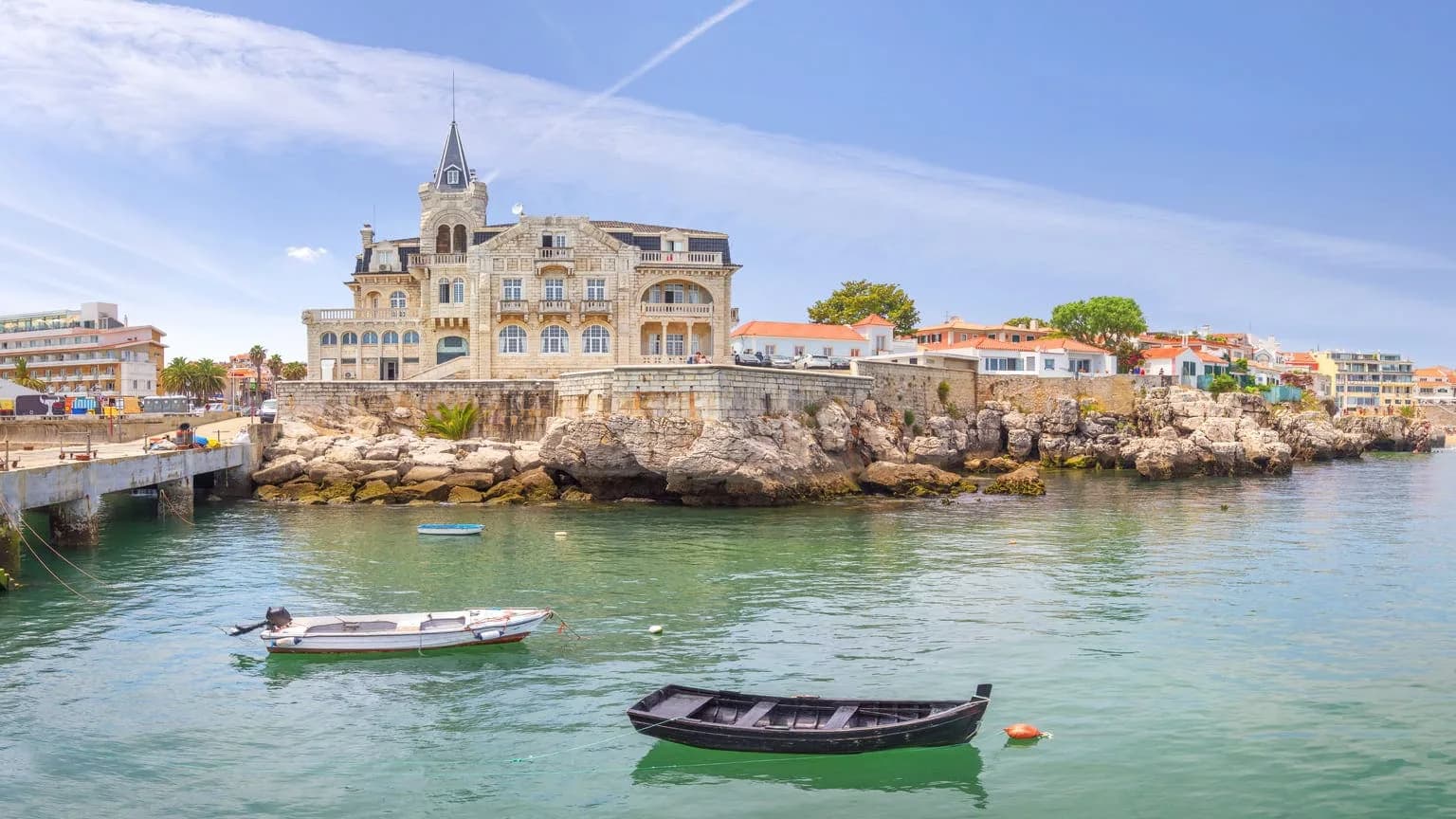










There’s hardly a list of the best countries Portugal has not appeared in. It has recently been ranked 25th in the world’s ranking of the best states for doing business by Forbes.
Let’s dwell on why Portugal is not only a tourist paradise but also an attractive destination for starting a business.
Advantage №1
Access to the European market
As a member of both the European Union and the Schengen Area, Portugal is a good start for businesses planning to expand in Europe. The European Union is an economically stable and constantly developing area with a large customer base.
Investors often choose Portugal because of the Golden Residence Permit Program, which allows foreigners to move there. One of the investment options is starting a business and creating at least 5 full-time jobs. The minimum investment amount for this option is €500,000.
Other options for investors to get a Portugal Golden Visa include:
- supporting arts and cultural heritage — €250,000;
- purchasing investment fund units — €500,000;
- investing in research — €500,000;
- transferring capital — €1,500,000.
The Portugal Golden Visa does not require investors to learn Portuguese. Foreigners also only need to spend 7 days a year to maintain residency.
Investors can obtain Portuguese citizenship in 5 years. There is no need to reside in the country to qualify for the passport.
Advantage №2
Operating in one of the most visited countries in Europe
Portugal is a tasty morsel for both tourists and expats. The country is regularly on the lists of the best states to live in because of its higher living standards and lower prices. If developing a larger customer base is a priority, businessmen should consider Portugal.
Since 2022, Portugal has issued about 2,500 visas to digital nomads only. In addition to the Portuguese nationals, there are about 700,000 foreigners living there. The country has a diverse market and solvent customers.
Advantage №3
Top-notch means and decisions for businesses
Portugal ranks 32nd among 158 countries in the Readiness for Frontier Technologies Index. The country welcomes innovations and considers new technologies such as AI as means to help businesses.
According to the 22nd EY Europe Attractiveness Survey, Portugal is the 6th out of the 10 most attractive countries for Foreign Direct Investment. Portugal keeps its status as a country that is open to foreign initiatives and accepts strategies offered by everchanging tech-industries.
What makes Portugal stand out among other European countries is that some processes are automated. For example, Portugal offers businesses automatic and convenient VAT registration.
The VAT, or Value Added Tax, number is issued upon the company’s registration. Meanwhile, in other countries, businesses need to undergo a lengthy in-person procedure to get their VAT numbers.
Despite the fact that the Portugal startup ecosystem has been operating for not so long, it still accounts for startups representing over 1% of the country’s GDP. Those investing in startups related to innovation and technology can get a Startup Visa to Portugal.
The main requirements for startups are to grow rapidly, attract capital, enter international markets, and create full-time jobs. The entrepreneur can get a visa within six months if a startup is considered worthy.
Trusted by 10,000+ investors
Check your eligibility for the Portugal Startup Visa
Advantage №4
Many prosperous industries to choose from
Portugal is the 26th most prosperous country in the world, according to the overall Prosperity Index 2023. The Portuguese economy has improved over the years and continues to grow. The country stands out among other states in terms of personal freedom, infrastructure, and market access.
Portugal’s main industries include clothing, footwear, olive-oil, auto-parts manufacturing and distribution, dairy products, and wine production. The country is also famous for producing foods, porcelain, ceramics, and glassware.
Messaging the clients that a product they can buy is manufactured in Portugal can be profitable. Portuguese businesses have gained trust from consumers.
Advantage №5
Well-developed infrastructure
As the official webpage for Portugal infrastructure reads, the country has 2527 km of railways and 14,000 km of highways. Advanced infrastructure allows businesses to transport goods conveniently and in a timely manner.
In addition to the interior infrastructure, Portugal offers easy business travel to Europe. It is possible to visit Madrid or Paris in a couple of hours. London, which is considered the world’s financial capital, can be reached in 3 hours.
Railway or bus tickets are affordable in Portugal. Overall, it takes up to €50 for a monthly public transport pass. Companies enjoy discounts when supplying their employees with train or bus tickets.

The bridge over the Minho river connects Spain and Portugal and allows Spanish and Portuguese nationals easy visits between the states
Advantage №6
Access to international transportation hubs in Lisbon and Porto
Lisbon Airport is in the top 20 of the world’s busiest airports. The airport acts as the main international gateway to the state and also as a gateway to South America and South Africa. About 200,000 tonnes of cargo are transported through the Lisbon airport annually.
Francisco Sá Carneiro Airport, or Porto Airport, is the second-busiest in the country. As of 2023, the number of passengers transporting through or arriving at Porto Airport is about 10,200,000.
Foreign businessmen can, without any challenge, travel across Europe from Portugal, be it for private or business purposes. The USA, Canada, and Australia are also available from Portuguese airports, often by direct flights.
Average time needed to reach international business hub from Portugal
Advantage №7
Plethora of skilled professionals to hire
Apart from Portuguese, more than half of the population speaks Spanish and English.
Portuguese universities supply the country with engineers, scientists, and other tech and creative talents. The University of Porto is being included in the QS World University Ranking yearly. The university has undergraduate and postgraduate programs in the world’s most popular and in-demand fields, such as IT and management.
Entrepreneurs should consider Portugal if their business is tech-related and requires educated specialists. The country’s information and communications technology field accounts for about 10% of the Portuguese GDP, as reported by International Trade.
Since skilled employees are sought after, their salary starts at €4,500. If businesses want this workforce to benefit them, employers should keep in mind the competitive pay.
A Digital Nomad Visa allows remote workers to live in Portugal. They cannot work for a Portuguese company, but they influence the local professional community in a good way. For example, when foreign specialists join the local community, they share experience they have in different areas of life, including professional ones.
Advantage №8
Business-friendly tax system
Portugal has a participation exemption regime. It allows businesses to not pay taxes on dividends paid by subsidiaries. Capital gains resulting from the sale of shareholdings in subsidiary companies are not taxed as well.
Portuguese companies pay corporate income tax at a rate of 21%. The rate might be lower for companies based in Madeira, for example, 5% or 14.7%.
As for the country’s legal residents, they do not pay tax on income sourced outside Portugal or only pay it at a reduced rate of 20% for 10 years. This special tax regime is called the Non‑habitual Resident program.
However, starting 2024, Portugal plans to disable the NHR status. Residents who have already acquired the status can enjoy the tax benefits further. The NHR regime is supposed to be replaced with the same conditions, but for foreign researchers and university professors only.
Advantage №9
Residence permit for foreign entrepreneurs
Non-EU citizens can start a business in Portugal and obtain a residence permit. Currently, Portugal has several programs for entrepreneurs. Apart from the Golden Visa and the Startup Visa, there is also the D2 Visa.
The D2 Visa Portugal suits best for those who plan to do business in Portugal. Entrepreneurs must buy a local company or shares, or create a branch of an existing firm. Another option is to open a new company and present a detailed business plan outlining the prospects for its development.
There is no minimum investment amount for the D2 visa. However, the entrepreneur should confirm they have at least €9,120 a month to reside in Portugal.

Advantage №10
The general safety
Portugal is ranked 7th in the Global Peace Index 2023. In comparison, Japan, another tech‑hub, is ranked 9th.
Businesses in Portugal are less likely to be affected by international conflicts. This also implies that foreign investors often choose Portugal.
In terms of economic safety, Portugal seems to be effectively and rapidly recovering from challenges such as the pandemic. The most business-friendly areas are Madeira and the Azores, as these regions attract tourists and high-net-worth individuals.
Advantage №11
Mild climate
Portugal’s climate is beneficial for those businesses that transport cargo throughout Portugal. Snowstorms are not common in Portugal and do not affect transportation. Snow may fall in winter, but only in the mountains.
The temperature during winter does not drop below 5ºC, making Portugal suitable for selling products sensitive to cold. On the other hand, cargo sensitive to heat should be protected. In summer, temperatures usually range from 26°C to 30°C.
Advantage №12
Lower cost doing business
Portugal is one of the most affordable countries in Europe. On average, it is twice cheaper to live in Lisbon than in other capitals such as Rome or Paris.
Opening an entity in Portugal can also be cheaper than anywhere else in Europe. Typically, the cost of registering a business in Portugal is about €400. The most affordable business structure in Portugal is a Private Limited Company, or LDA. Starting an LDA usually costs from €5,000.
Commercial insurance plans are also affordable in Portugal. For example, the cost of public liability insurance for businesses starts at €50 a month.
4 disadvantages of doing business in Portugal
Although Portugal does seem like a paradise business-wise, there are a few drawbacks to operating there.
1. Long wait-time for the enforcement of contracts. Despite being digitised on average, Portugal still has a rather time-consuming bureaucracy. For example, waiting for a business registration certificate can cause delays. The legalisation procedures conducted by the government can take several months.
2. Crime rate. There is an unfortunate tendency: the number of registered crime reports in Portugal in 2022 increased by 14% compared to 2021. The most reported crimes are human and drug trafficking. However, the average crime rate is still relatively low in comparison with other countries.
3. Higher corruption rate. Small businesses and startups might face profiling in Portugal. Local businesses are often run by generations of Portuguese families. Thus, adapting to the Portuguese business culture can be challenging for foreigners.
4. Different culture to adapt to. This drawback is tightly connected to the previous one. Foreign entrepreneurs, especially those who do not speak Portuguese, often lack opportunities in Portugal. Locals might prefer companies they are familiar with to those run by other nationals.
Pros and cons of doing business in Portugal: an overview
Why businessmen choose Portugal
Portugal welcomes foreign entrepreneurs and allows them to obtain a residence permit. After 5 years of residing in the country, investors can acquire a passport if all the requirements are met.
The Portugal Golden Visa requires investing at least €500,000 in the country’s economy. The visa can be obtained in up to 16 months and is valid for 2 years. A spouse, children, parents, and siblings can get visas along with the main applicant.
The Portugal D2 Visa is for individuals opening a company or buying a ready-made business. There is no threshold for business investment but a minimum annual income of €9,120. An investor’s spouse, children, and parents can also apply for the D2 Visa.
The Startup Visa can be of use for entrepreneurs who want to move to Portugal to start and develop an innovative business. If the startup is approved, an investor can get a visa in 6 months.
How to get Portugal residence permit by opening a business there: a step‑by‑step procedure
Here’s how to get the Golden Visa Portugal by investing in a business in 6 months.
1 day
Preliminary Due Diligence
Immigrant Invest lawyers check an investor against international legal and business databases. Only a passport is needed. The procedure reduces the risk of refusal to 1%.
Immigrant Invest lawyers check an investor against international legal and business databases. Only a passport is needed. The procedure reduces the risk of refusal to 1%.
Up to 3 weeks
Choosing or opening a business
If an investor plans to invest in an existing firm, they will be given time to decide on the option.
If an investor plans to invest in an existing firm, they will be given time to decide on the option.
Up to 5 business days
Getting a taxpayer number
Non-EU citizens obtain their NIF, or taxpayer number, remotely via a tax representative in Portugal.
Non-EU citizens obtain their NIF, or taxpayer number, remotely via a tax representative in Portugal.
Up to 1 month
Opening a bank account
The investor needs a NIF number and a passport to open a bank account in Portugal.
The investor needs a NIF number and a passport to open a bank account in Portugal.
2 weeks
Submitting the visa application
Immigrant Invest lawyers assist investors and their families in collecting the documents and filling out the forms.
Along with business ownership confirmation, documents for the application include:
- an international passport;
- a medical insurance policy;
- 2 passport-sized photos;
- a police clearance certificate;
- marriage or birth certificates, if applicable;
- a Portuguese bank statement;
- a NIF number.
Immigrant Invest lawyers assist investors and their families in collecting the documents and filling out the forms.
Along with business ownership confirmation, documents for the application include:
- an international passport;
- a medical insurance policy;
- 2 passport-sized photos;
- a police clearance certificate;
- marriage or birth certificates, if applicable;
- a Portuguese bank statement;
- a NIF number.
1 day
Entry to Portugal for fingerprinting
An Immigrant Invest representative accompanies the applicant to the Portuguese Migration Service (SEF) for fingerprinting. From now on, an investor can live in the country but cannot leave it until the residence permit card is issued.
An Immigrant Invest representative accompanies the applicant to the Portuguese Migration Service (SEF) for fingerprinting. From now on, an investor can live in the country but cannot leave it until the residence permit card is issued.
Up to 6 months
Obtaining a residence permit card
If the application is approved, the residence permit is issued personally to the investor or their representative.
If the application is approved, the residence permit is issued personally to the investor or their representative.
What to remember about doing business in Portugal
- As a member of the European Union and the Schengen Area, Portugal is suitable for businesses planning to expand in Europe.
- The main advantages of doing business in Portugal include access to the European market, operating in one of the most visited countries, high-tech means and decisions for businesses, and a business-friendly tax system.
- The drawbacks of operating a company in Portugal are a long wait-time for contract enforcement, a rather high crime rate, corruption, and a different culture to adapt to.
- As Portugal’s Prime Minister Antonio Costa proposed, Portugal is to disable the NHR status starting 2024. Residents who have already acquired the status can keep it.
- Portugal Golden Visa allows investors to reside in the country. It requires investing at least €500,000. The visa can be obtained in up to 16 months and is valid for 2 years.


 Trusted by 10,000+ investors